The romance of an Italian name is undeniable. It evokes sun-drenched coastlines, rich history, and a language that sounds like music. But if you’re searching for gender neutral Italian names, you’ve likely run into a beautiful, centuries-old wall: the Italian language itself. It’s a world of Leonardos and Sofias, where names, like most nouns, are grammatically masculine or feminine.
So, how do you find a name that feels both authentically Italian and perfectly fluid? It’s a challenge, but one with creative and beautiful solutions. This guide is your map. We’ll navigate the traditional rules, uncover the hidden flexibility in the language, and explore the modern trends that are making Italian-inspired unisex names more accessible than ever.
At a Glance: Your Key Takeaways
- The Core Challenge: Italian is a gendered language, meaning names traditionally end in “-o” for boys (Matteo) and “-a” for girls (Alessia). Officially, true gender-neutral names don’t exist within Italy.
- The “-e” Exception: The most common path to a unisex name is choosing one that ends in “-e,” as these can be either masculine (Gabriele, Simone) or feminine (Celeste, Luce).
- Creative Categories: Many modern gender-neutral options come from Italian words for nature (Fiore), places (Roma), virtues (Pace), and concepts (Amore).
- Cultural Differences: Names that are strictly masculine in Italy, like Andrea or Luca, are often used as feminine or unisex names in the U.S. and other countries.
- Surnames as First Names: Using surnames like Armani or Ferrari is a popular global trend but is not a traditional practice in Italy and is legally prohibited there.
The Italian Naming Paradox: Why It’s So Tricky
Before diving into lists of names, it helps to understand why this search is unique. Unlike in English, where names like Taylor, Jordan, or Casey are inherently unisex, Italian grammar assigns a gender to almost everything.
A chair (sedia) is feminine. A table (tavolo) is masculine. This principle extends directly to names. This isn’t just a casual convention; it’s baked into the country’s legal and cultural framework. Italian naming laws, overseen by the anagrafe (civil registry), are designed to prevent ambiguity. A registrar can challenge a name they deem inappropriate for a child’s assigned gender, though legal precedent shows this is becoming more flexible, especially for parents with foreign citizenship.
But don’t let that discourage you. While the traditional system is rigid, the spirit of the language is full of beauty and potential. The modern world has found several clever ways to embrace Italian style without being limited by grammatical gender.
Four Modern Paths to a Gender-Fluid Italian Name
Think of these as different strategies, each with its own charm and style. Whether you want something classic, poetic, or bold, one of these paths will likely lead you to the perfect name.
1. The “-e” Ending: Italy’s Built-in Flexibility
This is the most traditional and authentically Italian route. While most names end in “-o” or “-a,” a small but significant group of names ends in the letter “-e.” These names are the closest you’ll get to a truly unisex option within Italian culture because the ending itself doesn’t signal a specific gender.
- Traditionally Masculine: Daniele, Gabriele, Michele, Simone.
- Traditionally Feminine: Celeste, Felice, Irene.
Because the ending is neutral, names from this group feel effortlessly fluid. Celeste, meaning “heavenly,” is a prime example. While it has traditionally been used for girls in Italy, its soft sound and celestial meaning give it a widespread unisex appeal abroad. Similarly, Felice, meaning “happy” or “lucky,” works beautifully for any child.
2. Beyond People: Names from Nature, Places, and Ideas
This approach steps outside of traditional given names entirely, drawing inspiration from the rich vocabulary of the Italian language. It’s a poetic and increasingly popular way to find a name that is both meaningful and gender-neutral. These names feel fresh and modern yet are rooted in words that are deeply Italian.
- From Nature and the Cosmos: Think of Luce (light), Sole (sun), Fiore (flower), or Lupo (wolf). These names carry the power and beauty of their meaning. A name like Mare (sea) is beautifully simple and evocative.
- From Places: Italian geography offers a treasure trove of gorgeous names. Roma, Verona, Milan, and Capri are chic, sophisticated, and carry the weight of their iconic locations. They work because their primary association is with a place, not a person.
- From Virtues and Concepts: This category offers some of the most profound options. Amore (love), Pace (peace), Fede (faith), and Vita (life) are powerful, aspirational names. Diamante (diamond) feels strong and precious, suitable for any gender.
3. Crossing Borders: Names That Changed Their Gender
Some of the most popular “unisex” Italian names in the English-speaking world are, ironically, strictly masculine in Italy. This is a fascinating example of how names evolve as they travel across cultures.
The most famous example is Andrea. In Italy, Andrea is exclusively a boy’s name, as classic as Michael or David in the U.S. However, for decades in America and other countries, Andrea has been overwhelmingly used for girls. If you choose this name for a girl outside of Italy, it will be perfectly understood, but be aware of its traditional roots.
Similarly, Luca, while still predominantly masculine, is gaining traction as a unisex or even feminine name in English-speaking countries, perhaps due to its soft vowel sounds. Other names in this category include Nicola and Mattia, both firmly male in Italy but possessing a sound that feels more open and versatile to a non-Italian ear.
4. The Surname Strategy: A Global Trend (with a Catch)
Using a surname as a first name is a common practice in the U.S. but is legally prohibited in Italy. However, for those living outside of Italy, this approach opens up a world of chic, high-fashion, and powerful-sounding options.
Think of iconic Italian brands and historical figures: Armani, Ferrari, Fendi, Marconi. These names are instantly recognizable and have a strong, sophisticated flair. Surnames with descriptive meanings also work well, such as Ricci (curly) or Costa (coast/rib). This method is perfect for anyone seeking a name that is distinctly Italian in origin but thoroughly modern in its application. This approach is one of the most creative ways to find unique Italian unisex names that feel both classic and contemporary.
A Curated List of Gender-Neutral Italian Names
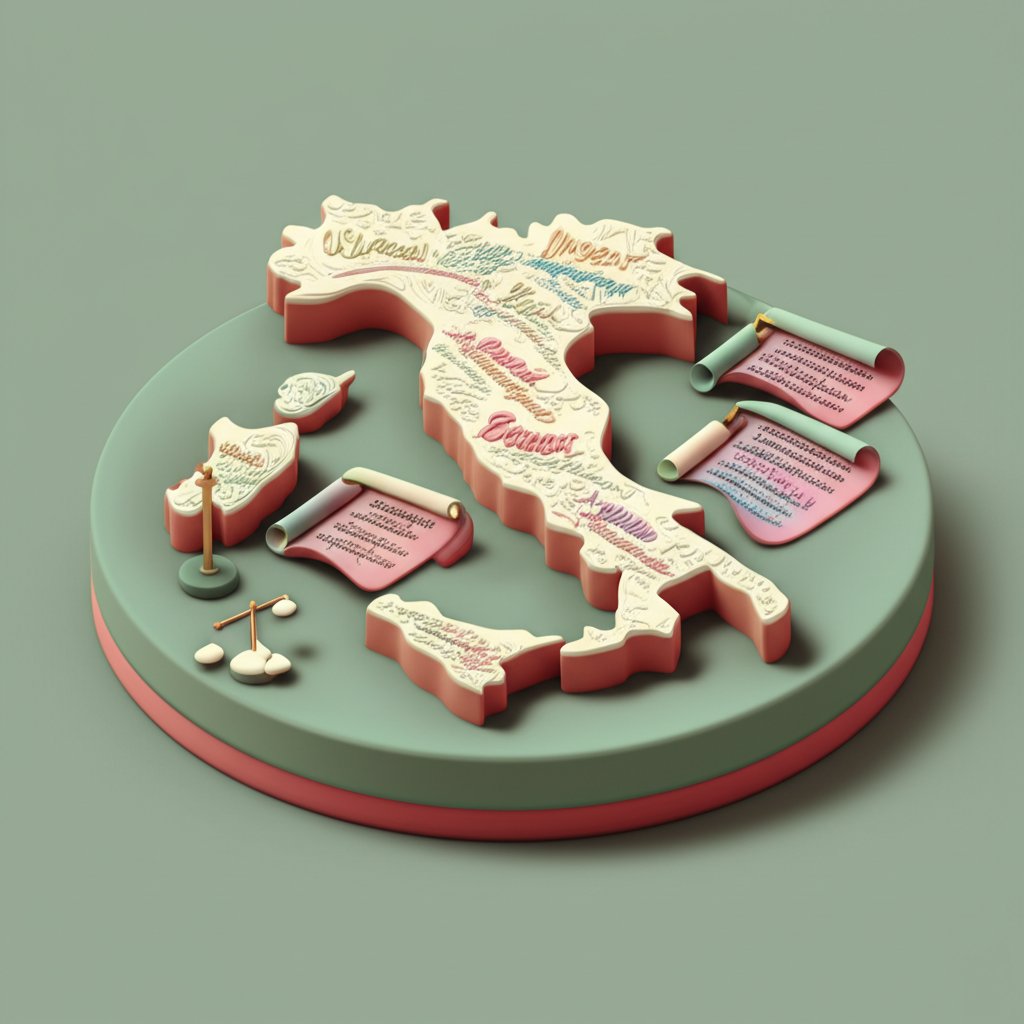
Here are some of the best options, organized by the strategies we’ve discussed.
Names From the World Around Us (Nature, Places, & Ideas)
These names are drawn from the Italian lexicon and are not traditionally used as given names in Italy, making them a blank slate for gender identity.
| Name | Meaning | Vibe |
|---|---|---|
| Amore | Love | Poetic, romantic, warm |
| Capri | Place name | Sunny, chic, coastal |
| Celeste | Heavenly | Ethereal, gentle, calm |
| Diamante | Diamond | Strong, brilliant, precious |
| Fiore | Flower | Delicate, natural, fresh |
| Leone | Lion | Bold, strong, noble |
| Luce | Light | Bright, hopeful, clear |
| Lupo | Wolf | Wild, intuitive, loyal |
| Mare | Sea | Expansive, deep, serene |
| Pace | Peace | Calm, tranquil, gentle |
| Roma | Place name | Historic, strong, classic |
| Sole | Sun | Radiant, warm, powerful |
| Verde | Green | Natural, vibrant, fresh |
| Vita | Life | Energetic, foundational |
Names Ending in “-e”
These names have a history of use in Italy and offer a more traditional path to a unisex choice.
| Name | Italian Gender Usage | Vibe |
|---|---|---|
| Daniele | Masculine | Classic, gentle, wise |
| Felice | Feminine/Masculine | Joyful, lucky, bright |
| Gabriele | Masculine | Strong, artistic, kind |
| Michele | Masculine | Classic, dependable |
| Simone | Masculine | Sophisticated, smart |
Crossover Classics (Masculine in Italy, Unisex Elsewhere)
These names are perfect if you love a classic Italian sound but aren’t concerned with the traditional gender rules of Italy.
| Name | Notes on Usage |
|---|---|
| Andrea | A top-tier male name in Italy; a popular female name in the US. |
| Elia | Masculine form of Elijah in Italy; feels light and fluid abroad. |
| Luca | Overwhelmingly masculine in Italy; trending unisex in the US. |
| Mattia | A popular male name in Italy; its “-a” ending makes it feel feminine to English speakers. |
| Nicola | The Italian form of Nicholas; used for girls (spelled Nichola) in other cultures. |
| Nico | A common nickname for Niccolò or Nicola; a sleek, standalone unisex name elsewhere. |
Italian Surnames as First Names
Bold, stylish, and distinctly modern, these names are inspired by famous Italian legacies.
- Alessi
- Armani
- Costa
- Ferrari
- Lanza
- Marconi
- Messina
- Ricci
- Rizzo
Your Naming Checklist: Before You Decide
You’ve found a name you love—congratulations! Before you make it official, run through these final checks to ensure it’s the perfect fit for your family.
✅ Check the Meaning (and Avoid the Pitfalls)
Most of the names on our list have beautiful meanings, but when you venture into using everyday Italian words, a quick search is essential. A word might sound beautiful but have a comical or strange meaning. For example, Coda might sound melodic, but it means “tail.” Rana has a nice ring to it but means “frog.” A little research goes a long way.
✅ Say It Aloud: The Importance of Pronunciation
Part of the beauty of an Italian name is its sound. Take a moment to listen to a native speaker pronounce it (sites like Forvo are excellent for this). Don’t worry about perfection, but understanding the correct cadence and vowel sounds will help you and your child carry the name with confidence. For example, Luce is pronounced “LOO-cheh,” not “loose.” Fiore is “FYO-reh.”
✅ Understand the Cultural Context
This is the most important step. Be clear on the name’s identity in Italy versus its identity where you live. If you name your daughter Andrea and travel to Italy, people will be surprised. This isn’t necessarily a bad thing—it can be a great conversation starter!—but it’s something to be aware of. Decide if you prefer a name that is unisex in both cultures (like Celeste) or if you’re comfortable with a name that has a different gender identity in its country of origin (like Luca or Andrea).
Answering Your Top Questions
Let’s tackle some of the most common questions that come up when searching for gender-neutral Italian names.
Are there any truly, 100% gender-neutral names in Italy?
Officially, no. The Italian civil registry system is built on a binary gender model, and names are categorized as either masculine or feminine. However, names ending in “-e” are the closest equivalent, as they are used for both boys and girls, even if a specific name leans one way traditionally (e.g., Gabriele is almost always a boy, Celeste is almost always a girl).
Can I legally name my daughter Andrea in Italy?
This is complex. An Italian registrar would likely flag it, as Andrea is a male name. However, the laws have become more lenient, especially for parents with dual citizenship or foreign parents living in Italy. There have been successful legal cases where parents have won the right to use a name that crosses traditional gender lines. It’s not straightforward but is no longer impossible.
Is Luca a boy’s or girl’s name?
In Italy, Luca is unequivocally a boy’s name, derived from the Latin “Lucas.” It has never been used for girls. Its rise as a unisex name is a phenomenon specific to the United States and other English-speaking countries, where its soft, two-syllable structure fits modern naming trends for all genders.
Why can’t Italians use surnames as first names?
It’s simply a matter of law and tradition. Italian naming law (specifically, Article 35 of DPR 396/2000) explicitly prohibits giving a child the same name as a living parent or sibling, or using a surname as a first name. The culture prioritizes a clear distinction between given names and family names.
More Than a Name: Finding the Perfect Fit
Choosing a name is a beautiful act of hope and identity. While the path to a gender-neutral Italian name has its unique twists and turns, it’s a journey filled with creativity and meaning. You aren’t just picking from a pre-approved list; you’re engaging with a rich culture and finding a piece of it that aligns with your modern values.
Whether you’re drawn to the breezy elegance of Capri, the quiet strength of Luce, or the classic feel of Simone, you are honoring Italian heritage while giving your child a name that offers freedom and flexibility. The perfect name isn’t about following a rulebook—it’s about finding a sound that feels like home.
- Discover the Funniest Names Beginning With C for Pets and People - September 13, 2026
- Discover Unique Names Beginning With C for Your Baby - September 12, 2026
- Cool Names Beginning With C To Consider For Your Little One - September 11, 2026