When you hear “waspy names,” a distinct image often materializes: Nantucket summers, ivy-covered walls, and a quiet confidence that only generations of inherited status can confer. These aren’t just preppy names; they are the linguistic echoes of America’s old guard, a subtle yet powerful signal of lineage, tradition, and a certain kind of understated privilege.
At a Glance: Decoding Waspy Names
- Understanding the Distinction: Differentiate “waspy” from general “preppy” by focusing on deep historical roots and generational wealth.
- The Surname-as-First-Name Trend: Learn why many classic waspy names are repurposed family last names.
- Embracing Timelessness: Discover how these names resist trends, favoring enduring classics and traditional spellings.
- Ivy League & Elite Connections: Understand the subtle nods to prestigious institutions woven into these names.
- Crafting Your List: Get practical steps for choosing names that authentically evoke old money charm.
- Avoiding Missteps: Identify common pitfalls when aiming for a genuinely waspy aesthetic.
Defining “Waspy Names”: Beyond Just Preppy
While all waspy names can be considered preppy, not all preppy names carry the specific weight and history of a true waspy designation. The term “WASP” traditionally stands for White Anglo-Saxon Protestant, referring to a historically dominant social group in the United States. When applied to names, “waspy” evokes a very specific subset of preppy: those deeply rooted in generational wealth, elite East Coast connections, and a heritage that often traces back to colonial America or early European settlement.
These names are more than just stylish; they are signifiers. They don’t shout for attention but subtly communicate a history of stability, education at top-tier institutions, and an inherited place within the social fabric. Think less about fleeting trends and more about names that have graced family trees for centuries, passed down through the generations. For a broader exploration of names that share a similar refined aesthetic, you can Explore timeless preppy names, but here, we’re diving into the deep end of the “old money” pool.
The DNA of Waspy Naming: Heritage and Legacy
Waspy names are intrinsically linked to family history and a commitment to preserving tradition. They often reflect a lineage that values continuity over novelty, drawing heavily from specific linguistic and cultural wells. This isn’t about being unique; it’s about being recognizable within a particular social stratum.
Surnames as First Names: A Hallmarker of WASP Identity
One of the most defining characteristics of a truly waspy name is the practice of using a surname as a given name. This tradition stems from several roots: honoring maternal lines, preserving esteemed family names that might otherwise die out, or commemorating notable ancestors. It’s a powerful way to embed lineage directly into a child’s identity.
Consider names like Harrison, Fletcher, Graham, or Reid for boys. For girls, think of Sloane, Hadley, Palmer, or Collins. These aren’t just attractive sounds; they often originated as last names of prominent families, now repurposed to signify a similar stature in a new generation. This practice instantly conveys a sense of established background, a quiet nod to heritage that feels effortless rather than ostentatious.
Nodding to Institutions: Ivy League & Elite Prep School Echoes
The WASP world is deeply entwined with specific educational institutions. From the hallowed halls of Ivy League universities like Yale, Princeton, and Harvard to prestigious prep schools such as Phillips Exeter, Andover, and Groton, these names carry an undeniable cultural cachet. While you might not name a child “Yale” directly (though “Princeton” has seen some use!), the spirit of these institutions influences name choices.
This influence often manifests in subtly academic or classically English names that feel at home within these environments. Think of traditional names that have been common among graduates of these schools for decades: Elizabeth, William, Margaret, Thomas, Eleanor. Sometimes, even the surnames of benefactors or founders of such institutions find their way into the naming pool, becoming an indirect homage to a world of intellectual and social privilege.
Subtle Signaling: The Unwritten Rules of Waspy Names
Choosing a waspy name isn’t about following a trend; it’s about adhering to an aesthetic code that prioritizes discretion, quality, and timelessness. These names are not meant to stand out through flashiness but through an almost invisible layer of refinement that only those “in the know” fully appreciate. It’s the linguistic equivalent of bespoke tailoring or an heirloom watch – understated, yet unmistakably superior.
Avoiding Trendiness: The Pursuit of Enduring Classicism
The waspy aesthetic fundamentally rejects fads. A truly waspy name prioritizes longevity and respectability over contemporary popularity. This means steering clear of names that spike quickly in popularity or are heavily influenced by celebrity culture. Instead, the focus is on names that have proven their staying power over generations.
Think of classic choices like Caroline, Grace, Victoria, or Frances for girls, and James, William, Charles, or Thomas for boys. These names are never “out of style” because they exist in a realm beyond transient fashion cycles. They convey a sense of stability and an aversion to anything that might be perceived as nouveau riche or overly eager to impress. The goal is to project an innate, unearned sense of belonging.
The Art of the Double-Barrel and Middle Name
Another common characteristic in waspy naming conventions is the strategic use of middle names, often incorporating family surnames or names with significant historical ties. While not always double-barreled in the hyphenated sense, the practice of giving a child a classic first name followed by a strong, often surname-derived, middle name is prevalent. This allows for both a nod to tradition and the incorporation of multiple family lines.
For instance, a boy might be named “Charles Montgomery” where Montgomery is a maternal family surname. A girl might be “Eleanor Beaumont,” tying her to a storied ancestral name. These middle names aren’t filler; they’re essential pieces of the puzzle, reinforcing connections and ensuring that the child’s identity is firmly anchored in their heritage. This tradition also explains the occasional use of “Jr.” or Roman numerals (like “III” or “IV”) to denote continued lineage.
Crafting Your Own Waspy Name List: A Practical Playbook
Selecting a name with a genuinely waspy feel requires more than just picking something “classic.” It involves a deliberate approach that balances tradition, sound, and subtle cues of heritage. Here’s a practical guide to building a list that truly resonates with old money charm.
Step 1: Research Your Roots (or Desired Roots)
Start by exploring your own family tree, particularly any surnames from previous generations, especially on the maternal side which are often “lost” to male lineage. Look for names that sound distinguished, have historical significance, or evoke specific geographical locations associated with established American families (e.g., New England towns, old Southern estates). If you’re “aspirational” in your choices, research prominent historical families, philanthropists, or influential figures from the late 19th/early 20th century whose surnames you admire for their sound and association.
- Mini-Example: Discovering a great-grandmother’s maiden name was “Whittaker” or a great-uncle named “Brooks.” These instantly become candidates for a first name.
Step 2: Embrace the “Surname-as-First-Name” Trope
This is perhaps the most direct route to a waspy name. Not just any surname will do, however. Focus on those that are:
- Established and Familiar: Avoid overly obscure or recently coined surnames. Think names that sound like they belong to a family with a long history.
- Often Anglo-Saxon or Celtic in origin: Many classic American WASP families have roots in England, Scotland, or Ireland.
- Not overly trendy: While some surname names become popular (e.g., Parker), aim for those that feel more enduring.
- Relatively short and strong: One or two syllables often work well.
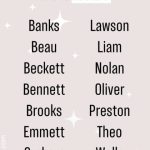
Examples: - Boys: Brooks, Carrington, Carter, Chase, Collins, Cooper, Davis, Fletcher, Graham, Hayes, Harrison, Miller, Palmer, Preston, Prescott, Reid, Spencer, Sterling, Sutton, Walker, Winston.
- Girls: Blair, Campbell, Carter, Collins, Darby, Hadley, Hollis, Kennedy, Palmer, Prescott, Reagan, Reese, Sloane, Sutton, Whitney.
Step 3: Classic, Unfussy Given Names (Often English/Anglo-Saxon)
If a surname as a first name isn’t your preference, or you’re looking for middle names, stick to eternally classic, refined choices. These names have stood the test of time and are typically free from any modern flourishes or unconventional spellings. They exude a quiet confidence and dignity.
Examples:
- Boys: Arthur, Charles, Edward, Frederick, George, Henry, James, John, Louis, Oliver, Philip, Richard, Robert, Samuel, Thomas, William.
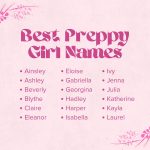
- Girls: Alice, Anne/Ann, Beatrice, Caroline, Charlotte, Claire, Diana, Eleanor, Elizabeth, Evelyn, Frances, Grace, Jane, Katherine/Kate, Margaret, Mary, Victoria.
Step 4: The Sound Test: Formal Yet Approachable
A waspy name should sound distinguished when formally announced, but also have the potential for a friendly, unpretentious nickname. This duality is key. “William” can be “Will,” “Elizabeth” can be “Beth,” “Caroline” can be “Carrie.” The name should roll off the tongue easily and feel comfortable in both a boardroom and a beach club setting. Avoid names that sound overly elaborate or difficult to pronounce.
Pitfalls to Avoid:
- Being Overtly Trendy: Names that are currently topping the popularity charts for a reason other than their historical staying power.
- Too Unique or Unconventional: Invented spellings or names that draw too much attention to themselves can feel out of place. The goal is understated elegance, not novelty.
- Forcing a “WASP-y” Sound: Don’t pick a surname as a first name if it sounds awkward or doesn’t have a natural flow with your family’s actual surname. Authenticity, even if constructed, is key.
- Overly “Sweet” or “Fussy” Names: While charming, some names can lean too cutesy for the waspy aesthetic. Aim for substance and strength.
Waspy Names in Action: Case Snippets
Let’s look at how these elements combine to create a distinct waspy impression.
- Case Snippet 1: Harrison Prescott V (Boy)
- Breakdown: “Harrison” is a classic surname-as-first-name, immediately signaling tradition. “Prescott” functions as a strong, distinguished middle name, also a surname, evoking old New England money. The Roman numeral “V” solidifies the generational lineage, a clear mark of established heritage. This name suggests a long line of accomplished individuals.
- Case Snippet 2: Sloane Carrington (Girl)
- Breakdown: “Sloane” is a sophisticated, slightly aristocratic surname name for a girl, suggesting urbanity and an effortless cool. “Carrington” as a middle name reinforces the surname-chic, giving the name a powerful, memorable cadence. It evokes images of polished refinement and quiet influence.
- Case Snippet 3: Brooksleigh “Brooks” Whitaker (Boy)
- Breakdown: “Brooksleigh” is a more elaborate, yet still traditional-sounding surname-as-first-name, often found in older Southern WASP families. The chosen nickname “Brooks” is classic and approachable, demonstrating the duality of formality and casual elegance. “Whitaker” as the surname adds another layer of established, Anglo-Saxon heritage.
- Case Snippet 4: Gwendolyn “Gwen” Phillips (Girl)
- Breakdown: “Gwendolyn” is a strong, classic, somewhat academic-sounding name that doesn’t rely on being a surname, but feels deeply rooted and timeless. The short, sweet nickname “Gwen” maintains approachability. “Phillips” as a surname (or even a middle name here) subtly links to prominent families or institutions, adding an understated layer of sophistication.
Quick Answers: Common Questions About Waspy Names
What is the difference between a preppy name and a waspy name?
While both share traits like classicism and refinement, “waspy names” are a more specific subcategory of “preppy names.” Waspy names specifically refer to those associated with established, often generationally wealthy, White Anglo-Saxon Protestant families, typically with strong ties to elite East Coast institutions and historical lineage. Preppy names, more broadly, encompass a wider range of classic, sporty, or even surname-style names that evoke the general preppy aesthetic, without necessarily implying the same deep historical or socio-economic roots.
Are waspy names always traditional?
Yes, largely. The essence of a waspy name is its timelessness and connection to tradition. They eschew modern trends, unique spellings, or names that lack historical precedent. While some might be less common today than a century ago, they are almost invariably classic names that have existed for a long time.
Can you use a non-WASP surname as a waspy first name?
While the traditional “waspy” names often draw from Anglo-Saxon or Celtic surnames, the style of using a surname as a first name has broadened. If you choose a surname from a different ethnic or linguistic background that has a strong, classic sound and isn’t overly trendy, it can achieve a similar effect of sophisticated distinction. The key is the sound, timelessness, and avoiding anything that feels like it’s trying too hard.
Do waspy names ever go out of style?
No, not truly. Waspy names exist in a realm beyond fleeting fashion. Their appeal lies precisely in their enduring classicism and resistance to trends. While their popularity might ebb and flow slightly, they never become truly “dated” because they are anchored in tradition and a specific cultural identity that values continuity.
Is it appropriate to choose a waspy name without “old money” connections?
Absolutely. Many people are drawn to the elegance, strength, and timeless quality of these names, regardless of their personal background. Choosing a waspy-style name can be a way to honor history, evoke a desired aesthetic, or simply select a beautiful, classic name that you love. The “appropriateness” lies in your personal preference and appreciation for the style, not in requiring a specific lineage.
Crafting Your Legacy: An Actionable Close
Choosing a waspy name is an exercise in subtle elegance and a nod to a rich, historical aesthetic. It’s about selecting a name that sounds established, intelligent, and quietly confident. By focusing on names that have stood the test of time, repurposing distinguished surnames, and prioritizing classic, unfussy spellings, you can craft a name that carries an air of effortless grace and inherited charm. These names don’t just fill a birth certificate; they tell a story of lineage, tradition, and a certain timeless distinction.

- Waspy Names Reveal Old Money, Ivy League Connections - October 22, 2026
- Preppy Male Names Are Classic Choices For A Sophisticated Son - October 21, 2026
- Discover Classic Preppy Guy Names for Your Little Gentleman - October 20, 2026