Here is the detailed cluster article, crafted according to your specifications.
Finding compelling japanese names that mean death girl is a journey into the heart of a culture that views mortality not just as an end, but as a poignant, often beautiful, part of existence. Unlike the stark finality often seen in Western names, these Japanese names draw from nature, spirituality, and art, creating a sense of melancholy beauty perfect for a complex character or a deeper thematic exploration. But there’s a critical line between a name that works for a powerful anime character and one that’s appropriate in the real world—and understanding that difference is key.
This guide is for creators, writers, and the deeply curious. We’ll explore the names that carry the weight of mortality with grace, unpacking their true meanings and the cultural context you need to use them authentically.
At a Glance: Your Key Takeaways
- Culture Over Literalism: Japanese culture often avoids the direct kanji for death,
死(shi), in naming. Instead, it uses metaphor and natural imagery to evoke themes of mortality.- Fiction vs. Reality: Names that literally mean “death” are almost exclusively found in fiction (manga, anime, games). Real-world names are far more subtle.
- The Power of Kanji: The meaning of a name comes from its kanji characters. We’ll break down how characters for “darkness,” “autumn,” or “night” can create a somber, beautiful effect.
- Beyond the Morbid: Many of these names reflect Buddhist concepts like impermanence (mujo) and the transient beauty of life (mono no aware), focusing on the cycle of life rather than just the end.
- Actionable Lists: You’ll get curated lists of names categorized by their thematic feel—from poetic and natural to dark and spiritual—with notes on their appropriate use.
The Cultural Lens: Why Death Can Be Beautiful in a Name
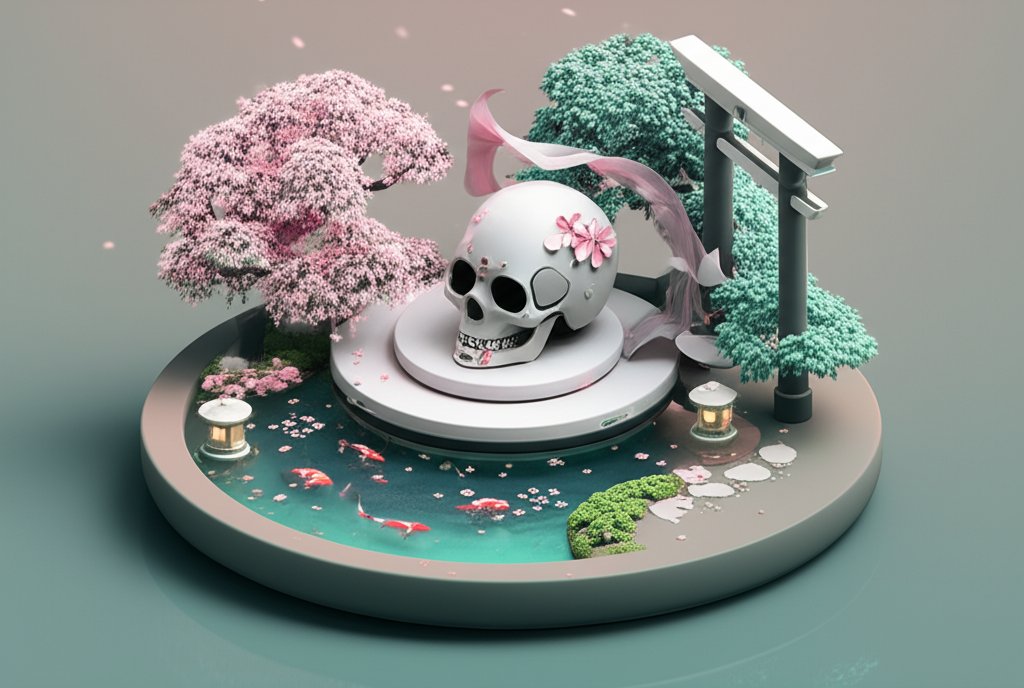
In Japan, the perception of death is deeply influenced by Shinto and Buddhist philosophies. Life is seen as fleeting, a concept known as mujo (無常), or impermanence. This isn’t necessarily a sad thing; rather, it makes every moment more precious. This idea is perfectly captured by the cherry blossom (sakura), which is breathtakingly beautiful for a short time before scattering in the wind. Its beauty is inseparable from its brief lifespan.
This cultural perspective is the source of many names that touch upon mortality. They don’t scream “death” but whisper about the transient nature of things, the quiet of a rainy night, or the fading light of autumn. While this approach is common, the direct use of the kanji 死 (shi), meaning “death,” is a major cultural taboo in naming a child. It’s considered unlucky and grim. However, in creative works, this taboo is often intentionally broken to give a character a shocking or profoundly symbolic name.
Understanding this duality is crucial. For a broader look at how different cultures handle this theme, our complete Guide to names meaning death offers a global perspective that can add even more depth to your research.
Fictional Worlds vs. Real Life: The Great Divide
This is the most critical distinction to make. The names that are most exciting and direct are often the ones you can only use in fiction. Misusing them can make a story feel uninformed or, if used for a real person, be a serious cultural misstep.
For Fictional Characters: Direct, Poetic, and Powerful
In manga, anime, and video games, names are a storytelling tool. A name can instantly tell the audience about a character’s powers, destiny, or inner turmoil. Here, literal or overtly dark names shine.
| Name (Kanji) | Pronunciation | Meaning & Context |
|---|---|---|
| Kurami (暗美) | Koo-rah-mee | “Dark Beauty.” A perfect name for a gothic heroine or a beautiful but tragic antagonist. Combines 暗 (darkness) with 美 (beauty). |
| Yami (闇) | Yah-mee | “Darkness.” Simple, direct, and powerful. It’s a common name for characters who wield dark powers or have a mysterious past. |
| Shiho (死帆) | Shee-ho | “Sail of Death.” This is a purely poetic and fictional creation, evoking a journey to the afterlife. It’s too literal for real-world use. |
| Rei (霊) | Ray | “Spirit” or “Ghost.” A very popular name in fiction, it suggests an ethereal, otherworldly quality. It can be a real name, but the kanji 霊 is rare; more common kanji like 麗 (beautiful) or 玲 (sound of jewels) are used instead. |
| Maboroshi (幻) | Mah-bo-ro-shee | “Illusion.” This name speaks to the phantom-like, unreal nature of life. It’s a beautiful, philosophical choice for a mystical or deceptive character. |
For Realistic Use: Subtle, Natural, and Evocative
If you’re looking for a name that a real person might have—or for a character in a realistic setting—you need to turn to subtlety. These names hint at mortality through the lens of nature and emotion.
- Aki (秋): Pronounced Ah-kee. It simply means “Autumn.” This season represents the fading of life, maturity, and a beautiful decline before the “death” of winter. It’s a common and lovely name.
- Amaya (雨夜): Pronounced Ah-mah-yah. This name combines the kanji for “rain” (雨) and “night” (夜). It doesn’t mean death, but it evokes a mood of quiet melancholy, contemplation, and peace, often associated with a peaceful end.
- Sakura (桜): Pronounced Sah-koo-rah. The cherry blossom. As mentioned, it’s the ultimate symbol of mono no aware—the beautiful sadness of life’s transient nature.
- Shizuku (雫): Pronounced Shee-zoo-koo. Meaning “droplet” of water. It can symbolize a tear or a final, gentle drop of rain, representing a quiet and soft departure.
A Curated List of Japanese Girl Names Evoking Mortality
To help you find the right fit, here are names broken down by their thematic feel. Pay close attention to the “Best For” notes to ensure you’re using them in the right context.
Category 1: The Poetic and Natural
These names connect to the cycles of nature and are often beautiful, subtle choices suitable for both realistic fiction and real-world inspiration.
- Aki (秋) – Autumn. Represents the beauty in fading life.
- Sakura (桜) – Cherry Blossom. The symbol of life’s fleeting beauty.
- Amaya (雨夜) – Rainy Night. Evokes a mood of quiet melancholy and introspection.
- Ren (蓮) – Lotus Flower. In Buddhism, the lotus grows from mud, symbolizing purity, enlightenment, and the cycle of death and rebirth.
- Yume (夢) – Dream. Touches on the illusory nature of life and the dream-like state of the afterlife.
- Shizuku (雫) – Droplet. Represents a single, final moment or a quiet, gentle end.
- Kasumi (霞) – Mist. Mist obscures and creates an ethereal, ghostly atmosphere, hinting at the veil between worlds.
Best For: Protagonists in realistic dramas, characters with a deep connection to nature, or anyone seeking a beautiful name with a subtle, melancholic undertone.
Category 2: Darkness and Shadow
These names are more direct and are almost exclusively used for characters in fantasy, sci-fi, or horror genres.
- Yami (闇) – Darkness. Direct, powerful, and iconic for characters with dark abilities.
- Kurai (暗い) – Dark, Gloomy. An adjective used as a name, very blunt and best for a character defined by their somber nature.
- Kurami (暗美) – Dark Beauty. Perfect for a character who embodies the aesthetic of gothic beauty.
- Kage (影) – Shadow. A unisex name often used for ninjas, assassins, or characters who operate from the shadows.
Best For: Antagonists, anti-heroes, or protagonists in dark fantasy settings. They immediately establish a character’s theme.
Category 3: Spirits, Souls, and the Afterlife
These names connect directly to the supernatural and the soul’s journey. They carry a heavy mystical weight.
- Rei (霊) – Spirit/Ghost. Classic choice for an ethereal or supernaturally connected character.
- Tama (魂) – Soul. A very direct name that centers a character’s identity around their spirit.
- Yurei (幽霊) – Ghost. Rarely used as a name even in fiction, as it’s the literal word for ghost. It would be like naming a character “Ghost.” More suitable as a title or species.
- Mayoi (迷い) – Lost. This name can refer to being spiritually lost or wandering after death, unable to cross over. A poignant choice for a ghost character.
Best For: Characters who are ghosts, mediums, or have a profound connection to the spirit world. Excellent for horror or supernatural stories.
Category 4: The Directly Macabre (Use with Caution)
These are not names but words. In fiction, a character might adopt one as a title or a chosen moniker to inspire fear. Never use these for a real person.
- Shi (死) – Death. The ultimate taboo. A character named Shi would be exceptionally rare and symbolic.
- Akuma (悪魔) – Demon/Devil. The literal word for a demon.
- Oni (鬼) – Ogre/Demon. Refers to the horned demons of Japanese folklore.
- Shikabane (屍) – Corpse. A word, not a name. A character might be called this as a cruel nickname.
Best For: Purely as titles, nicknames, or names for non-human entities (e.g., a sword named Shikabane). Handle with care to avoid melodrama.
Quick Answers to Common Questions
Q: Is it offensive to use a Japanese name meaning ‘death’ for my character?
Not necessarily, but context is everything. Using a name like Yami for a fantasy character is standard practice. Using a made-up, clunky name with the death kanji (死) without understanding the nuance can come across as clumsy or uninformed. The key is to be respectful and intentional. If your character is Japanese, ensure the name choice reflects the cultural norms of the world you’ve built.
Q: Can I just combine the kanji for ‘death’ and ‘girl’ to make a name?
No, this is a common pitfall. The Japanese language and naming conventions are complex. Combining kanji like 死 (shi, death) and 女 (onna, woman) to get Shionna doesn’t work; it sounds unnatural and nonsensical to a native speaker. Stick to established words and names or consult with a knowledgeable source.
Q: Are there any common Japanese girl names that secretly mean death?
Not “secretly,” but “poetically.” As we’ve covered, names like Aki (Autumn) and Sakura (Cherry Blossom) are very common and beloved. Their association with life’s transience is a layer of cultural meaning, not their primary definition. A Japanese person named Aki would not be considered “Death Girl”; she would be “Autumn Girl,” which is a beautiful thing.
Your Final Takeaway: Embrace Metaphor Over a Dictionary
When choosing from the world of japanese names that mean death girl, your best tool is metaphor. The most resonant and authentic names are not the ones that come from a literal translation of “death,” but from the imagery and emotions surrounding it: the fall of an autumn leaf, the quiet of a rainy night, the fleeting bloom of a flower.
For writers and creators, this offers a rich palette. Instead of asking “What’s the name for death?”, ask “What feeling do I want to evoke?”
- For quiet sorrow and acceptance, look to Amaya or Shizuku.
- For tragic, ephemeral beauty, choose Sakura or Kasumi.
- For overt, supernatural darkness in a fantasy world, Yami or Kurami are your powerful go-to options.
By focusing on the feeling, you’ll find a name that is not only beautiful and fitting but also culturally resonant and respectful.
- Discover the Funniest Names Beginning With C for Pets and People - September 13, 2026
- Discover Unique Names Beginning With C for Your Baby - September 12, 2026
- Cool Names Beginning With C To Consider For Your Little One - September 11, 2026