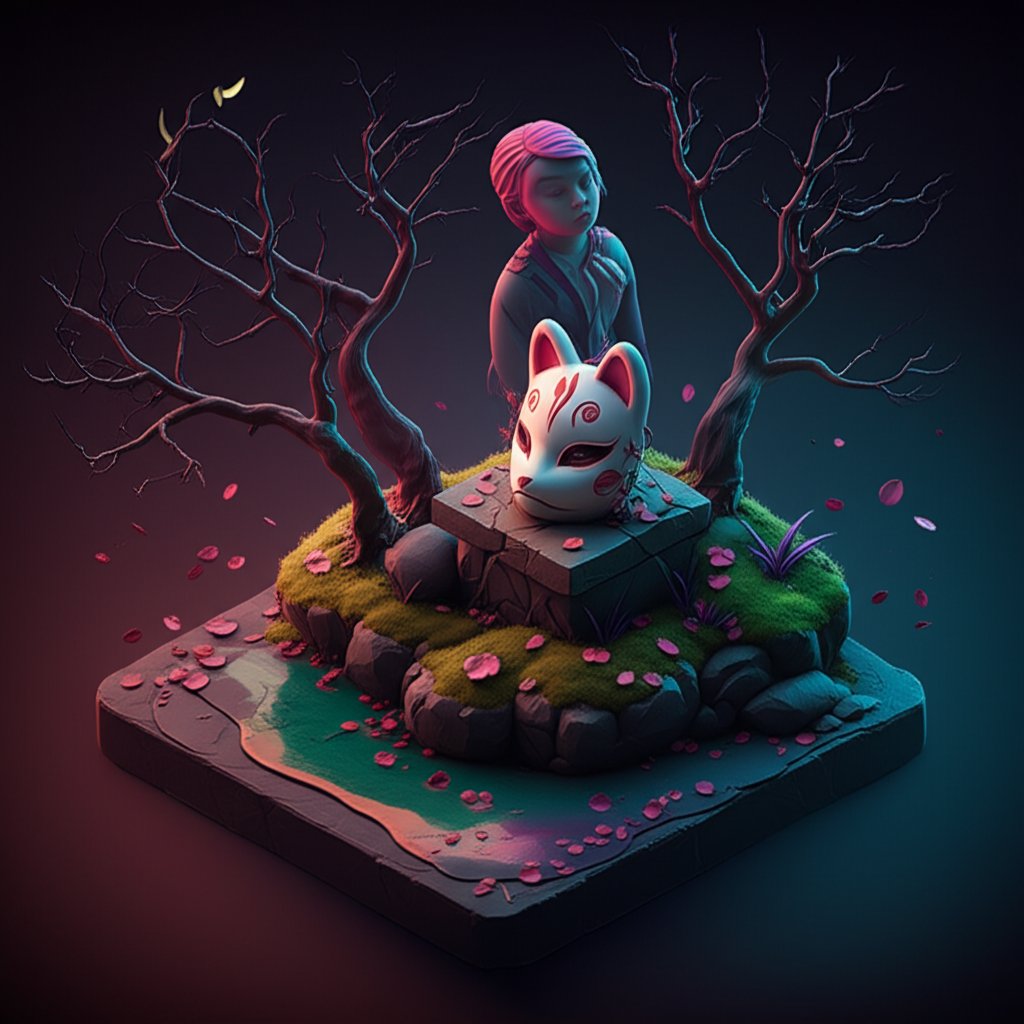
The world of Japanese girl names that mean death or darkness is deeply alluring, often encountered in the dramatic narratives of anime, manga, and video games. These names carry a certain weight—a poetic blend of sorrow, power, and mystery that can define a character in a single word. But unlike in fiction, these names are rarely, if ever, given to children in Japan, revealing a fascinating cultural divide between creative expression and real-world tradition.
Understanding this divide is the key to appreciating these names for what they are: powerful storytelling tools rooted in the rich soil of Japanese folklore, spirituality, and aesthetics. They are less about a literal wish for a dark future and more about embracing the profound, sometimes somber, beauty found in the shadows.
At a Glance: Key Takeaways
- Fiction vs. Reality: Names explicitly meaning “death” (using the kanji 死) are almost exclusively used for fictional characters, as real-world names are meant to be blessings.
- Direct vs. Symbolic: Some names, like Shihana (Death Flower), are direct. Others, like Yoru (Night) or Tsukiko (Moon Child), are symbolic, evoking darkness through natural imagery.
- The Power of Kanji: The meaning of a Japanese name is locked in its kanji characters. Combining a “dark” kanji like 冥 (underworld) with a “beautiful” one like 華 (flower) creates complex, layered names.
- Cultural Context is Crucial: Shinto and Buddhist views on life, death, and the spirit world give these names a depth that transcends a simple translation.
- A Tool for Creators: For writers and world-builders, these names offer a potent shorthand for establishing a character’s tone, backstory, or abilities.
The Cultural Divide: Why These Names Thrive in Fiction, Not Reality
In Japanese culture, a name is more than a label; it’s a profound wish for a child’s health, happiness, and success. Parents carefully select kanji with positive, aspirational meanings. Using a character like 死 (shi – death) or 悪 (aku – evil) in a real name would be culturally unthinkable—it’s like wishing a life of tragedy upon your own child.
This is why these names flourish in the creative realm. An author or game designer can use a name like Shihime (Death Princess) to instantly signal that a character is tragic, otherworldly, or menacing. It’s a narrative shortcut that taps into a collective cultural understanding of these powerful symbols.
This practice is deeply connected to Japan’s spiritual landscape. Shintoism and Buddhism both explore the cyclical nature of existence, where death is not just an end but a transition. Spirits (yūrei), demons (oni), and deities of the underworld (shinigami) are all familiar figures in folklore. Fictional names that draw from this wellspring feel resonant and authentic, even if they’d never appear on a birth certificate.
Deconstructing the Kanji: The Building Blocks of Dark Names

To truly understand Japanese girl names that mean death or darkness, you must first understand their components: the kanji. A single character can carry immense weight, and its combination with others creates a unique identity. Think of them as elemental ingredients for a name’s personality.
Here are some of the most common kanji used to build these evocative names:
| Kanji | Reading(s) | Core Meaning | Common Use in a Name’s Meaning |
|---|---|---|---|
| 死 | shi | Death | Direct, often for tragic or fated figures |
| 闇 | yami | Darkness, Gloom | Absolute, consuming darkness |
| 暗 | an, kura | Dark, Shadowy | A more general sense of darkness or secrecy |
| 冥 | mei | Underworld, Netherworld | A mythological, deep darkness |
| 霊 | rei | Spirit, Ghost | Supernatural or ethereal connections |
| 夜 | yoru, ya | Night | Melancholy, mystery, and quiet beauty |
| 影 | kage | Shadow | Stealth, illusion, or a hidden nature |
| 月 | tsuki, getsu | Moon | Poetic darkness, cyclical change |
| 冬 | fuyu | Winter | Dormancy, coldness, and solemnity |
| The artistry lies in combining these potent kanji with more conventional feminine characters like 子 (ko – child), 華 (ka/hana – flower), or 美 (mi – beauty). This juxtaposition creates a name that is both beautiful and haunting. |
A Curated List of Japanese Girl Names Meaning Death or Darkness

Here, we explore a collection of these names, organized by their thematic connection. For each, we’ll break down the kanji, meaning, and the type of character it might suit.
Names with Direct Connections to Death and the Underworld
These names are bold and unambiguous. They are best suited for characters who are personifications of death, deeply connected to the afterlife, or defined by a tragic fate.
- Shihana (死華): “Death Flower.” This name pairs the direct kanji for death (死) with the symbol for a flower (華). It evokes a beautiful but deadly image, perfect for a character whose allure is inseparable from danger or sorrow.
- Shihime (死姫): “Death Princess.” Combining death (死) with princess (姫), this name suggests a royal lineage tied to the underworld or a tragic figure destined to rule over a realm of death.
- Shizuki (死月): “Death Moon.” The moon (月) is a passive, watchful eye over the night. Paired with death (死), it creates a name that feels both cosmic and fatalistic, suggesting a destiny written in the stars.
- Meika (冥華): “Underworld Flower.” Using the kanji for the netherworld (冥) instead of “death” gives this name a more mythological, ancient feel. It’s less about the act of dying and more about the realm of the dead.
- Anmei (暗冥): “Dark Underworld.” A powerful and immersive name combining dark (暗) and the underworld (冥). It suggests a character who is not just from the darkness, but is the darkness itself.
Names Evoking Darkness, Night, and Shadow
These names are more subtle, using natural imagery to create a mood of mystery, melancholy, or quiet power. They are incredibly versatile for characters who are introspective, aloof, or possess hidden depths.
- Yoru (夜): “Night.” Simple, elegant, and profoundly evocative. As a name, Yoru is a classic choice for a character who is most comfortable in the shadows or whose personality is calm and mysterious like the night sky.
- Amaya (雨夜): “Night Rain.” This beautiful name paints a vivid picture. It doesn’t scream “darkness” but whispers it, suggesting a personality tinged with melancholy, contemplation, and a quiet, cleansing sorrow.
- Yami (闇): “Darkness.” Like Yoru, this is a direct and powerful name. However, where Yoru often feels serene, Yami implies a more total, primal, and potentially dangerous form of darkness.
- Anko (暗狐): “Dark Fox.” The fox (kitsune) is a creature of immense importance in Japanese folklore, often depicted as a clever trickster or a powerful spirit. Adding the “dark” kanji (暗) makes this name perfect for an enigmatic and cunning character.
- Yūgure (夕暮れ): “Twilight.” This name captures the liminal space between day and night. It’s ideal for a character who walks between two worlds or has a morally ambiguous nature.
Names Tied to Spirits and the Supernatural
These names are perfect for characters with spiritual abilities, ghostly connections, or an ethereal presence.
- Reiko (霊子): “Spirit Child.” A very common name in fiction for psychics, mediums, or characters with a ghostly companion. The common suffix “ko” (子) grounds the otherworldly “rei” (霊), making it feel like a plausible, if unusual, name.
- Akumu (悪夢): “Nightmare.” A very direct and intense name combining “evil” (悪) and “dream” (夢). This is a name for a villain or a character who torments others, literally or metaphorically.
- Mayoi (迷い): “Lost.” Often used in the context of a “lost soul” (mayoeru tamashii), this name suggests a character who is adrift, searching for purpose, or is literally a spirit unable to pass on.
Names with Symbolic or Poetic Meanings
These names achieve a dark aesthetic through association and poetry rather than literal translation. They are often considered beautiful in their own right. For a wider view on how different cultures use symbolism in names, our complete guide to Names meaning death, cultural insights offers a broader perspective.
- Tsukiko (月子): “Moon Child.” The moon governs the night and is a symbol of mystery, change, and madness. This name is a soft, beautiful way to link a character to the darkness without any negative connotations.
- Fuyuko (冬子): “Winter Child.” Winter is the season of dormancy, long nights, and death in nature. Fuyuko is a lovely name that can subtly hint at a character’s cold demeanor, somber past, or connection to ice and stillness.
- Rin (燐): “Phosphorus.” This is a fascinating and clever choice. Phosphorus is an element that glows in the dark, often with a green, ghostly light. It’s a name that means “light within darkness,” perfect for a character who finds hope in despair or has a hidden, guiding power.
- Yuriko (百合子): While the standard meaning is “Lily Child,” this name carries a potent secondary association. In Japan, white lilies (shirayuri) are strongly connected with funerals and memorial services. This gives the otherwise cheerful name a layer of solemnity and remembrance.
Quick Answers to Common Questions
Can I give my actual child one of these names?
It is strongly advised not to, especially any name containing the kanji for death (死) or evil (悪). Japanese names are wishes for a child’s future, and a name with such a heavy, negative connotation would be seen as a curse. Symbolic names like Yoru or Fuyuko are less problematic but still highly unconventional and might cause social friction.
Are names like Yami or Rei common in Japan?Context is everything. Yami is almost exclusively a fictional name. Rei, however, is a very common name, but it is almost always written with different kanji, such as 麗 (beautiful), 玲 (sound of jewels), or 怜 (wise). Using the kanji 霊 (spirit) for a real person’s name would be extremely rare.
What’s the difference between a name and a title like Shi no Onna?Shi no Onna (死の女) literally translates to “Woman of Death.” This is a descriptor or a title, much like calling a character “The Queen of the Night.” It’s not a given name you would use to address someone directly. Fictional names like Shihana are structured to be actual given names.
How can I verify if a name I found online is authentic?Be wary of online name generators that don’t provide the kanji. The meaning of a Japanese name is inseparable from its kanji characters. A name’s authenticity depends on whether the kanji combination is logical and culturally plausible, even if only for a fictional context. If you can’t see the kanji, you can’t know the true meaning.
A Practical Guide for Creators and Storytellers
Choosing the right name is a critical step in character design. Here’s a simple framework to select the perfect Japanese name that means death or darkness for your story.
- Define Your Character’s Core Theme. What is the central idea you want the name to convey?
- Tragedy and Fate: For a character doomed by destiny, lean into direct names with 死 (shi), like Shihana or Shizuki.
- Mystery and Secrecy: For a quiet, enigmatic, or aloof character, choose names related to night and shadow, such as Yoru, Amaya, or Kage.
- Supernatural Power: For a psychic, ghost, or spiritual medium, use names with 霊 (rei) or concepts like Akumu (Nightmare).
- Poetic Sadness: For a character defined by beautiful sorrow, symbolic names like Tsukiko (Moon Child) or Fuyuko (Winter Child) work wonderfully.
- Consider the Nuance and Intensity. Not all darkness is the same. Is your character’s darkness the quiet melancholy of a rainy night (Amaya) or the all-consuming void of an abyss (Yami)? Is her connection to death a tragic burden (Shihana) or a source of ancient power (Meika)?
- Check the Sound and Flow. Say the name aloud with your character’s surname. Does it sound natural? Is it easy for your intended audience to pronounce? A name like Reiko is very accessible, while Yūgure might be more challenging for non-Japanese speakers.
These names are more than just translations; they are fragments of story. They carry the echoes of ancient folklore, the quiet beauty of a moonlit night, and the profound weight of mortality. By choosing one thoughtfully, you give your character a name that not only defines them but also adds a layer of cultural depth and emotional resonance to your world. The most powerful names are not just about what they mean, but about the images and feelings they conjure in the mind.
- Pun Names Deliver Clever Wordplay That Sparks Instant Laughter - October 24, 2026
- Waspy Boy Names For Your Little Ivy League Gentleman - October 23, 2026
- Waspy Names Reveal Old Money, Ivy League Connections - October 22, 2026