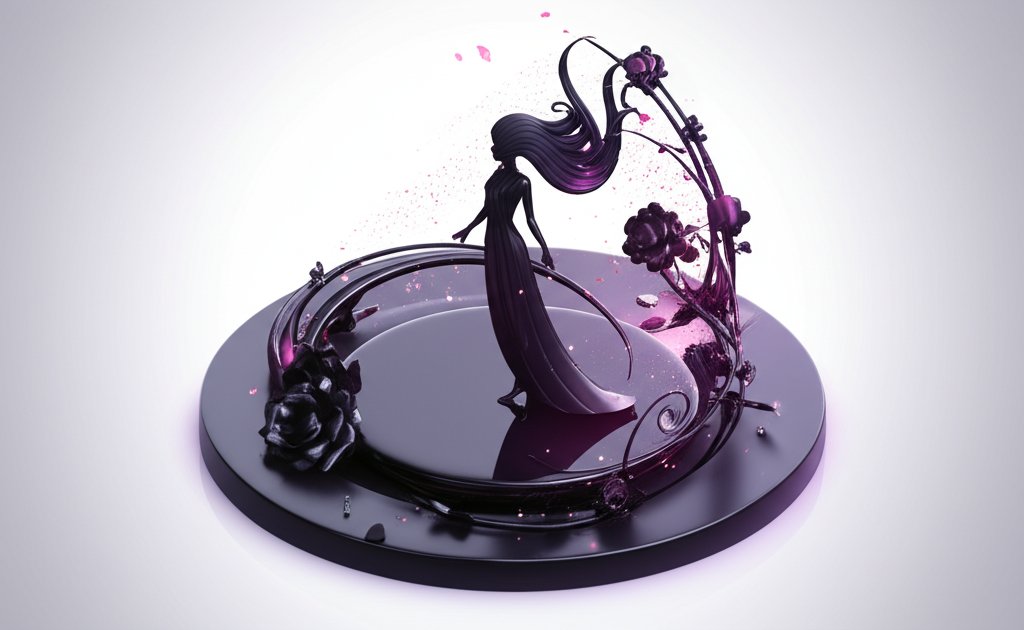
Choosing a name is often a search for light and virtue, but for some, the most powerful and beautiful choices lie in the shadows. The appeal of girl names that mean death is not about morbidity; it’s about embracing the full, complex spectrum of life, acknowledging its inevitable end, and finding strength in names that are unafraid of the dark. These names carry the weight of mythology, the poetry of sorrow, and the elegance of the gothic, offering a unique identity that is both haunting and profound.
They are names for heroines of tragedy, queens of the underworld, and forces of nature that command respect. They resonate with parents seeking a name that is unforgettable, steeped in story, and anything but ordinary.
At a Glance: Your Guide to Names with Dark Meanings
- Mythological Power: Discover names of ancient goddesses who ruled over death, fate, and the underworld, from the Norse Hel to the Greek Persephone.
- Direct & Poetic Meanings: Explore names that translate directly to “death,” “sorrow,” or “end,” like the Basque Amaia or the Hebrew Mara.
- Symbolic Connections: Find names linked to the natural world’s darker elements, such as the poisonous Belladonna flower or the prophetic Raven.
- Literary & Gothic Inspirations: Delve into names made famous by tragic literature, like Poe’s Lenore, and modern gothic creations.
- A Practical Framework: Learn how to choose a name with a dark backstory thoughtfully, balancing its meaning with its modern wearability.
Beyond the Macabre: Why We’re Drawn to These Names
The fascination with names tied to death isn’t new. For centuries, cultures have used such names to ward off evil, to honor the cycle of life and decay, or to capture a sense of profound, melancholic beauty. Today, this attraction is often rooted in a desire for a name that feels substantial and layered with meaning.
These names reject the purely sunny and embrace a more complete picture of existence. A name like Kali, the Hindu goddess of destruction, isn’t just about endings; it’s about the destruction of evil to make way for new creation. A name like Dolores, meaning “sorrows,” acknowledges that pain is a part of the human experience, and there is a quiet strength in that recognition.
While this article focuses on feminine names, understanding the broader Cultural meanings of death names provides a rich foundation for your choice. For many, these names are a nod to gothic aesthetics, a love for ancient myths, or simply a way to give a child a name that will never be forgotten.
Queens of the Underworld: Names from Mythology
Ancient myths are the most fertile ground for girl names that mean death. These aren’t names of victims; they are the names of powerful deities who held dominion over life’s final frontier. They are sovereigns, guardians, and primordial forces.
Greek and Roman Pantheon
The Greeks saw the underworld not as a place of evil, but as a final, inevitable kingdom. Its rulers and associated deities have names that carry an air of classical, tragic beauty.
- Persephone: The quintessential queen of the underworld. While her story begins with abduction, she grows to become a formidable ruler alongside Hades, commanding respect. Her name is synonymous with the changing seasons and the cycle of death and rebirth.
- Hecate: A powerful goddess associated with magic, witchcraft, the moon, and the crossroads—the liminal spaces between worlds. She is a guide for souls and a figure of immense, mysterious power.
- Nyx: The primordial goddess of the night, a figure so ancient and powerful that even Zeus feared her. She is the mother of personified death (Thanatos) and sleep (Hypnos), making her name a subtle yet profound link to the end of day and life.
- Achlys: The personification of misery and sadness, said to be the goddess of the “death mist” that clouds the eyes before dying. It’s one of the most direct and somber names from Greek mythology.
Norse, Slavic, and Celtic Deities
Northern and Eastern European myths offer names that are fierce, stark, and deeply connected to warfare and fate.
- Hel: The Norse goddess of the dead and ruler of the underworld, also named Hel. Daughter of Loki, she was cast into the underworld by Odin and tasked with judging the dead. Her name is simple, stark, and undeniably powerful.
- Morrigan: An Irish phantom queen associated with war, fate, and death. She often appeared as a raven over battlefields, deciding the fate of warriors. The name suggests a fierce, sovereign, and prophetic nature.
- Morana: A Slavic goddess of winter’s frost, pestilence, and death. Her reign ends in spring when she is ceremonially “drowned” or “burned” to welcome the new season, tying her name to the cyclical nature of life.
- Freyja: While primarily the Norse goddess of love and beauty, she was also a goddess of war and death. She received half of the warriors slain in battle in her heavenly field, Fólkvangr. This duality makes her name both beautiful and formidable.
Global Goddesses of Life and Death
From the ancient Near East to the Americas, deities of death were complex figures, often overseeing both birth and demise.
- Kali: A Hindu goddess of time, creation, and destruction. Often depicted as fearsome, her role is to destroy evil forces and ego. Her name is one of immense power and liberation from worldly attachments.
- Lilith: A figure from ancient Mesopotamian and Jewish folklore, often considered a primordial night demon. In modern interpretations, she has been reclaimed as a symbol of feminine independence, freedom, and defiance of patriarchal control.
- Ereshkigal: The Sumerian queen of the great below. Her name means “lady of the great earth,” and she ruled the land of the dead with absolute authority.
- Mictecacihuatl: The Aztec queen of the underworld (Mictlān). She watches over the bones of the dead and presides over festivals of the dead, which evolved into the modern Day of the Dead. The more accessible name Mictela is derived from this powerful figure.
Names with Direct Ties to Endings and Sorrow

Some names don’t hide behind myth or symbol. Their meanings are direct, tied to the very words for death, sadness, or finality. These names are bold, poetic, and have a unique, melancholic charm.
| Name | Origin | Meaning & Context |
|---|---|---|
| Mara | Hebrew | “Bitter.” In the Bible, Naomi asks to be called Mara after losing her husband and sons, tying it directly to grief. |
| Dolores | Latin | “Sorrows.” Derived from one of the Virgin Mary’s titles, Nuestra Señora de los Dolores (Our Lady of Sorrows). |
| Amaia | Basque | “The end.” It has a beautiful, melodic sound that contrasts with its definitive meaning. |
| Thana | Arabic | “Death.” A direct and unambiguous name, often used in literature for characters with a connection to mortality. |
| Tristea | Latin | “Sadness.” A lyrical, poetic name that directly evokes a sense of melancholy. |
| Mallory | French | “Unfortunate” or “unlucky.” While not “death,” it carries a strong connotation of tragic fate. |
| Bronach | Irish | “Sorrowful.” An ancient Irish name that is rare and evocative of deep emotion. |
Whispers from the Natural World
Nature has always been a powerful symbol of the life-death cycle. Plants that can heal or kill, animals that are omens, and the darkness of night all provide a rich source of names with a dark allure.
Dark Flora and Fauna
- Belladonna: Italian for “beautiful lady.” This is the name of the deadly nightshade plant, a beautiful but highly toxic flower. The name perfectly captures the duality of beauty and danger.
- Raven: This intelligent, dark bird is a near-universal symbol of death, prophecy, and mystery in folklore, from the Norse god Odin’s companions to Edgar Allan Poe’s famous poem.
- Yvonne: A French name derived from the yew tree. The yew has long been associated with death and immortality in European folklore, often planted in graveyards as a symbol of transcendence.
Shadows, Night, and Earthly Elements
- Leila: A name of Arabic and Persian origin meaning “night.” It’s a beautiful and popular name with a subtle connection to darkness and mystery.
- Umbra: The Latin word for “shadow.” A rare and evocative name that is both dark and elegant.
- Sable: The color black, used to describe the darkest of furs and the color of mourning. It has a sleek, sophisticated, and somber feel.
- Onyxa / Ebonya: Modern names inspired by onyx (a black gemstone sometimes associated with protection and absorbing negative energy) and ebony (a dense, black wood).
The Tragic Heroines of Literature and Fiction
From Shakespearean tragedy to modern gothic fantasy, literature provides a cast of characters whose names are forever linked with love, loss, and death.
- Lenore: The lost love mourned in Edgar Allan Poe’s “The Raven.” Her name has become the epitome of beautiful, tragic, and eternal remembrance.
- Ophelia: The tragic heroine of Shakespeare’s Hamlet. Her name is tied to a story of madness, grief, and a beautiful, watery death, often associated with flowers and fragility.
- Desdemona: Another of Shakespeare’s tragic figures from Othello. Her name means “ill-fated” or “misery,” foreshadowing her unjust demise.
- Isolde: The heroine of the Arthurian tragic romance Tristan and Isolde. Her story is one of all-consuming love that can only find its ultimate fulfillment in death.
- Morwen: A Welsh name meaning “maiden,” but famously used by J.R.R. Tolkien for a tragic character in The Silmarillion whose story is one of unending grief. The name feels ancient and sorrowful.
- Azrailia: A modern feminized version of Azrael, the Angel of Death in some Abrahamic traditions. It’s a powerful and unique name that has a distinctly gothic, ethereal feel.
A Practical Playbook for Choosing a Dark Name
Selecting a name with such a heavy meaning requires thoughtful consideration. Here’s a simple framework to guide your decision.
- Assess the Directness: Is the meaning symbolic or literal? A name like Leila (“night”) is subtle, while Thana (“death”) is direct. Decide which level of intensity you’re comfortable with.
- Consider the Story: Dig into the full myth or story behind the name. Is the character a powerful agent of her own destiny (like Morrigan) or a tragic victim (like Ophelia)? The story will shape the name’s energy.
- Say It Aloud: How does it sound with your last name? Some names, like Smierc (Polish for “death”), can be phonetically challenging in English-speaking contexts. A name like Amaia flows easily.
- Think About Nicknames: A long, dramatic name like Persephone can be softened with nicknames like Percy, Sephy, or Penny. Dolores is often shortened to the cheerful Lola.
- Gauge the Cultural Context: Be aware of how the name is perceived. Morticia, for example, is almost exclusively associated with The Addams Family. While this can be a positive for fans, it’s a permanent pop-culture link.
Quick Answers to Common Questions
Q: Are girl names that mean death considered bad luck?
A: This is entirely a matter of cultural and personal belief. In some traditions, naming a child after a death deity or a tragic concept would be considered tempting fate. In others, it’s seen as a way to build resilience or acknowledge life’s full reality. For most modern parents, the focus is on the name’s historical richness, aesthetic appeal, and the strength of its story.
Q: What are some softer, more subtle names with a connection to death?
A: If you want to touch on the theme without being overt, consider names with indirect associations.
- Talia: A Hebrew name meaning “dew from God,” often associated with resurrection and rebirth in folklore.
- Niamh: An Irish name meaning “bright,” but tied to a myth of love, loss, and leaving the mortal world behind.
- Demetra: The Greek goddess of the harvest, whose story is defined by the grief of losing her daughter Persephone to the underworld for half the year.
- Rachel: A biblical name connected to a story of deep sorrow and loss.
Q: Can I just create my own gothic-sounding name?
A: Absolutely. Modern creations like Cryptessa or Velmorta have a clear gothic style. The advantage is a truly unique name. The potential downside is that it may lack the historical and literary depth of established names and could feel dated over time. A good middle ground is to modify a mythological name, like creating Thanissa from Thanatos or Azrailia from Azrael.
Finding the Beauty in the Shadows
Choosing a girl’s name that means death is an act of defiance against the mundane. It’s a decision to equip a child with a name that is a conversation starter, a piece of art, and a link to the deep, powerful stories that shape our understanding of life itself. These names are not a wish for a dark future; they are an acknowledgment of the profound beauty found in melancholy, the strength forged in tragedy, and the eternal allure of the unknown.
Whether you choose the regal power of Persephone, the poetic sorrow of Lenore, or the natural mystery of Raven, you are selecting a name that is rich, resonant, and anything but forgettable.

- Names That Mean Protector Exploring Strong Roots and Noble Meanings - March 27, 2026
- Names That Mean Protect and Embody Strength and Loyalty - March 25, 2026
- Explore Names Meaning Giver of Life for Your New Baby - March 24, 2026