When you consider the legacy you want to imbue in your son, few choices carry the weight, depth, and unwavering spirit quite like men names in the bible. These aren’t just ancient labels; they are echoes of heroes, prophets, and leaders whose stories continue to shape faith and culture today. Choosing a biblical name is about connecting your child to a heritage of strength, meaning, and a profound sense of purpose. It’s an intentional decision that resonates for a lifetime, offering a daily reminder of values like courage, devotion, and resilience.
At a Glance: Crafting Your Son’s Biblical Name Legacy
- Discover Deep Meanings: Uncover the powerful stories and virtues behind each name, going beyond mere sound.
- Balance Tradition & Modernity: Find biblical names that feel fresh and relevant for today’s world while honoring their ancient roots.
- Identify Your Values: Align name choices with the core character traits you hope to foster in your son.
- Navigate Categories: Explore classics, hidden gems, and short, impactful names to find the perfect fit.
- Consider Practicalities: Evaluate sound, flow with your surname, and nickname potential for everyday use.
- Make an Informed Choice: Gain confidence in selecting a name that offers enduring strength and faith.
Why Biblical Men Names Offer an Unmatched Foundation for Your Son
Choosing a name is one of the first profound gifts you give your child. For many parents, men names in the bible represent more than just a label; they’re a covenant, a hope, and a connection to a narrative much larger than our own. This deep resonance is why these names continue to be chosen, decade after decade, across cultures and continents.
These names are steeped in thousands of years of faith and history, carrying gravitas and meaning that transcend mere religious affiliation. Whether you’re a deeply religious family or simply drawn to names with historical depth, the stories of courage, faith, and resilience embedded within these names offer a powerful blueprint for character. Parents often choose them as daily reminders of the values they cherish, shaping the spiritual and ethical landscape of their homes.
Navigating the Rich Tapestry: Categories of Biblical Men Names
The vast array of biblical names can feel overwhelming, but they often fall into distinct categories, each offering a unique appeal. Understanding these can help you zero in on the perfect fit for your son.
Classic Cornerstones: Timeless & Universally Loved
These are the names that have graced generations, instantly recognizable and enduringly popular. They often belong to pivotal figures whose stories are widely known, imbuing the name with immediate authority and warmth. Think of names like:
- David: Hebrew for “beloved.” The shepherd king, a symbol of devotion, trust, and leadership. A name that speaks to overcoming odds and reigning with heart.
- Noah: Hebrew for “rest” or “comfort.” A popular choice evoking peace, resilience, and a fresh start. His story is one of unwavering obedience and new beginnings.
- Joseph: Hebrew for “he will add.” Dignified, patient, and kind, symbolizing grace and perseverance through adversity. A name rich with integrity and divine favor.
- Samuel: Hebrew for “God has heard.” A distinguished, approachable name for a faithful servant whose prayers shaped a nation. It suggests a listening ear and a life dedicated to service.
Hidden Gems & Rare Finds: Distinctive & Meaningful
For parents seeking a name less common but equally profound, the Bible offers a treasure trove of unique options. These names carry deep spiritual weight and powerful stories, yet stand out in a crowd.
- Boaz: Hebrew for “swiftness” or “strength.” Ruth’s husband, known for integrity, kindness, and steadfast devotion. A name that quietly signifies noble character.
- Silas: Latin/Greek for “wood” or “forest.” Paul’s companion, a loyal, devoted figure full of quiet strength. It sounds vintage-cool yet remains grounded.
- Phineas: Hebrew for “oracle.” A priest name, quirky, upright, and guided by conviction. It carries an ancient charm and intellectual depth.
- Azariah: Hebrew for “helped by God.” A regal name shared by several biblical figures, suggesting divine assistance and favor.
Short & Punchy Picks: Minimalist & Impactful
Sometimes, less is more. These brief, strong names make an immediate impression and are easy to pronounce and remember. Despite their brevity, they carry significant biblical weight.
- Job: Hebrew, meaning “persecuted.” A story of endurance, patience, and unshakable faith. A powerful, concise name for strength in adversity.
- Levi: Hebrew for “joined” or “attached.” A priestly tribe, loyal, steadfast, and representing unity. This name conveys strong family ties and dedication.
- Seth: Hebrew for “appointed.” Adam’s son, simple and strong, a reminder of renewal and divine purpose. It’s foundational and enduring.
- Cain: Hebrew for “acquired.” While associated with the first murder, historically it symbolizes beginnings and the human story. Its simplicity belies its deep narrative. (Note: Many parents might shy away from this due to its negative connotation, highlighting the importance of understanding the full context.)
Melodic & Modern Sounds: Fresh Yet Rooted
These names often have a contemporary feel or lend themselves to modern nicknames, making them popular among parents who want a name that bridges ancient heritage with present-day appeal.
- Azriel: Hebrew for “God is my help.” Known for “carrying out the will of God,” powerful, potent, and fearless. It has a strong, ethereal sound.
- Lior: Hebrew for “my light.” Radiant and uplifting, a beautiful choice that evokes brightness and optimism.
- Zane: Hebrew for “gift from God.” Brief, strong, and effortlessly modern, combining biblical meaning with contemporary style.
- Malakai: A modern twist on Malachi, “my messenger,” vibrant and contemporary. It offers a fresh take on a prophetic name.
For an even wider selection and deeper exploration into biblical names for your son, you can always Explore Biblical names for your son.
Decoding the Meaning: A Practical Name Guide by Trait
Choosing a biblical name often starts with the virtues and characteristics you hope your son embodies. Let’s delve into names that align with specific, desirable traits, offering you a more focused selection process.
Names Symbolizing Leadership & Strength
These names are tied to figures known for their authority, courage, and ability to guide.
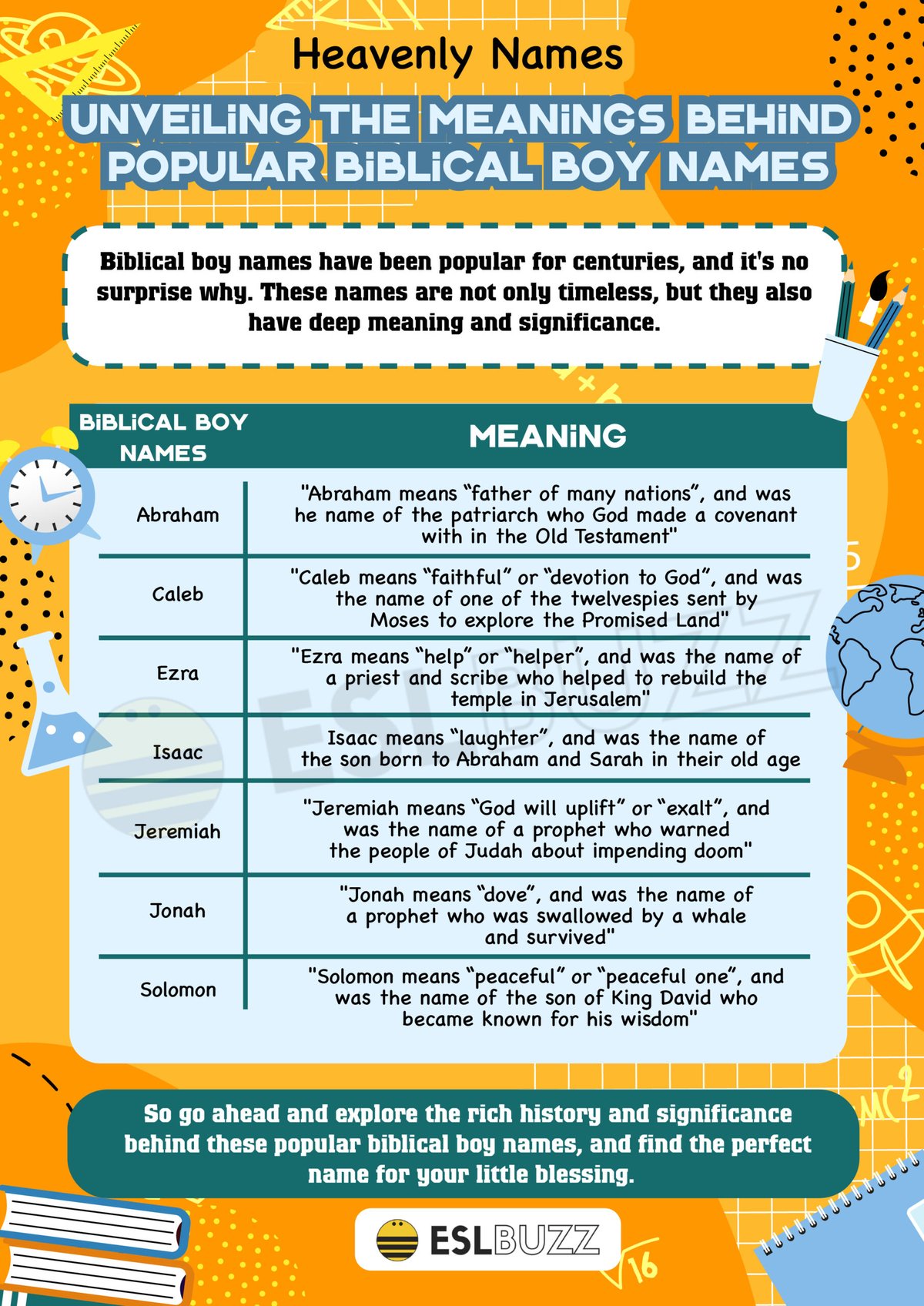
- Abraham: Hebrew for “father of many” or “exalted father.” The ultimate patriarch, known for ethics, trust, and leadership. A name for a natural leader.
- Joshua: Hebrew for “the Lord is salvation.” A strong and faithful leader who succeeded Moses, embodying courage and divine guidance.
- Gideon: Hebrew for “mighty warrior” or “mighty in faith.” A judge of Israel known for trusting God’s guidance against overwhelming odds.
- Benjamin: Hebrew for “son of the right hand.” Founder of one of the twelve tribes of Israel, known for being focused, confident, and powerful.
- Barak: Hebrew for “lightning.” A powerful and effective man who showed humility in battle. A name suggesting swiftness and impact.
Names Embodying Faith & Devotion
For those who prioritize spiritual depth and unwavering belief, these names represent figures whose lives were defined by their commitment to God.
- Elijah: Hebrew for “Yahweh is God.” A devoted prophet whose belief never wavered, a symbol of unshakeable faith.
- Daniel: Hebrew for “God is my judge.” Steady, wise, and guided by prayer and conviction, even in the face of immense pressure.
- Caleb: Hebrew for “wholehearted” or “faithful.” A man of courage and steadfast faith who stood firm despite opposition.
- Job: Hebrew, meaning “persecuted.” A story of extraordinary endurance, patience, and unshakable faith through suffering.
- Obadiah: Hebrew for “servant of God.” The prophet of the shortest biblical book, humble and devoted.
Names Reflecting Wisdom & Insight
These names are associated with sagacity, thoughtful discernment, and deep understanding.
- Solomon: Hebrew for “peace.” The wisest king, renowned for his judgment and expansive knowledge. A name that promises insight and tranquility.
- Nathan: Hebrew for “he gave.” A prophet who wisely advised King David, known for generosity and grace in truth-telling.
- Jethro: Hebrew for “abundance” or “excellence.” Moses’s father-in-law, a wise and gracious counselor.
- Eli: Hebrew for “ascended.” Simple and strong, representing faith and guidance as a high priest and judge.
Names of Grace & Comfort
For a gentle, reassuring presence, these names evoke qualities of peace, kindness, and solace.
- Isaac: Hebrew for “laughter.” Gentle yet strong, a joyful reminder of faith fulfilled and promises kept.
- Jonah: Hebrew for “dove.” Famous for the whale story, a peaceful and compassionate name that signifies redemption.
- Barnabas: Aramaic for “son of encouragement.” Renamed by the early church for his compassionate and generous spirit.
- Tobias: Hebrew for “God is good.” Bright and friendly, filled with kindness and hope, a name that radiates positivity.
- Noah: Hebrew for “rest” or “comfort.” A popular name in America, conveying serenity and renewal.
Unique Names with Deep Roots
Sometimes, a name stands out for its specific, powerful meaning, offering a distinctive choice.
- Bezalel: Hebrew for “in the shadow of God,” an artistic name linked to divine creativity.
- Ariel: Hebrew, meaning “lion of God.” A powerful name symbolizing strength, courage, and royalty.
- Othniel: Hebrew for “God is my strength.” The first judge of Israel, steady and resolute.
- Ziv: Hebrew for “radiance,” luminous and full of spirit, glowing with optimism.
Beyond the Scripture: Practical Considerations for Choosing Your Son’s Name
Understanding the rich meanings is just the first step. To ensure the name you choose truly fits your son and your family, consider these practical aspects.
- Sound and Flow: Say the full name aloud – first, middle, and last. Does it roll off the tongue naturally, or does it feel clunky? Consider how it sounds with your surname and if it harmonizes with potential sibling names. A name like “Ezekiel Jones” has a different rhythm than “Noah Smith.”
- Nickname Potential: Many biblical names offer fantastic nickname opportunities, blending formality for official use with casual coolness for everyday life. Ezekiel naturally shortens to “Zeke,” Gabriel to “Gabe,” and Joshua to “Josh.” Think about preferred nicknames and whether they feel authentic.
- Cultural and Modern Appeal: While rooted in antiquity, many biblical names possess a timeless quality that makes them feel perfectly at home in modern society. Names like Caleb, Ethan, and Levi are currently trending, proving that ancient roots can offer fresh appeal. Consider if you want a classic, a trend-setter, or something truly unique.
- Personal Connection: Does the story behind the name resonate deeply with your family values or personal aspirations for your son? A name like “Daniel,” for instance, might appeal to parents hoping their son will stand firm in his convictions, guided by wisdom and prayer. This personal connection often makes the name feel “right.”
Avoiding Common Pitfalls When Choosing Biblical Names
Even with the best intentions, some common missteps can lead to regret. Be mindful of these to make a confident choice.
- Overlooking the Full Story: Don’t just pick a name based on its sound or a single positive association. Research the full biblical context. For example, while “Cain” means “acquired,” his story is largely one of tragedy. Similarly, “Dathan” means “fountain” but is associated with rebellion. Understand the full narrative to avoid unintended implications.
- Pronunciation Challenges: Some biblical names, while beautiful, can be difficult for others to pronounce or spell. Consider how often your child might have to correct people and if that’s a burden you’re willing for them to carry. Names like “Jehoshaphat” or “Zephaniah” are strong but might require more explanation.
- Unintended Modern Associations: Occasionally, an ancient name might have acquired an unfortunate modern connotation or similarity to something undesirable. A quick search can often reveal these, helping you avoid accidental missteps.
- The “Too Common” or “Too Rare” Dilemma: Finding the sweet spot can be tricky. A name that’s too common might feel less unique, while one that’s too rare might invite constant questions. Reflect on your family’s preference for popularity – do you want your son to be one of many “Noah”s or the only “Othniel”?
Your Biblical Name Playbook: A Step-by-Step Approach
Choosing a name is a journey, not a sprint. Follow this practical playbook to guide your decision-making process.
- Define Your Values: Start by listing 3-5 character traits or aspirations you wish for your son. Do you hope for him to be courageous, wise, compassionate, or strong in faith? This clarity will act as your filter.
- Explore Meanings & Stories: Dive into resources like this article and the provided ground truth to identify names aligning with your defined values. Read the biblical accounts associated with these names. Which stories resonate most deeply with you?
- Create a Shortlist: Don’t try to choose from hundreds. Pick your top 10-20 names that genuinely appeal to you.
- Say It Aloud (Many Times): Practice saying each shortlisted name with your surname, and potential middle names. Listen to the rhythm and flow. Does it feel natural and strong?
- Consider Nicknames: For each name on your shortlist, brainstorm common or desired nicknames. Ensure you like both the full name and its likely shortenings.
- Discuss with Your Partner (and Family if Desired): Naming is a team effort. Share your research and insights, and listen to their perspectives. Sometimes, another person’s reaction or association can provide valuable clarity.
- Visualize Your Son: Imagine calling your son by this name as a baby, a child, a teenager, and an adult. Does it feel appropriate and enduring at every stage of life?
- Trust Your Gut: After all the research and deliberation, there’s often an intuitive feeling. The right name will simply feel right. Don’t second-guess that intrinsic connection.
Quick Answers: Your Top Questions About Biblical Men Names
Q: Are biblical names too old-fashioned for a modern child?
A: Absolutely not. While ancient, many biblical names possess a timeless appeal and are actively trending. Names like Noah, Elijah, Ethan, and Levi consistently rank among the most popular choices, demonstrating their enduring relevance and charm in contemporary society.
Q: Can I use a biblical name if I’m not religious?
A: Yes, certainly. Many parents are drawn to biblical names for their rich historical significance, profound meanings, and strong, classic sound, entirely separate from religious conviction. These names are part of a shared cultural heritage and hold broad appeal.
Q: How do I choose between two equally strong biblical names?
A: When faced with a tough choice, focus on the deeper meaning and personal connection. Consider which biblical story or character resonates more with your family’s values and aspirations for your son. Also, evaluate the sound, flow with your last name, and nickname options for each.
Q: What if I want a unique biblical name, not one of the popular ones?
A: The Bible is full of “hidden gems” that are both distinctive and deeply meaningful. Explore names like Boaz, Silas, Phineas, Azriel, or Othniel. These names offer strong character and a unique sound without being completely unfamiliar.
Solidifying Your Son’s Legacy
The decision of what to name your son is one of the earliest and most profound choices you’ll make for him. By choosing from the rich tapestry of men names in the bible, you’re not just giving him a label, but a legacy. You’re offering him a name steeped in enduring strength, profound faith, and a heritage of characters who stood for something greater than themselves. This intentional connection to history and values can be a powerful anchor throughout his life, a constant reminder of the hopes and dreams you hold for him.

- Men Names in the Bible Offer Enduring Strength and Faith for Sons - November 13, 2026
- Biblical Names for Men Offer Strength and Lasting Significance - November 12, 2026
- Christian Baby Boy Names That Reflect Faith and Heritage - November 11, 2026