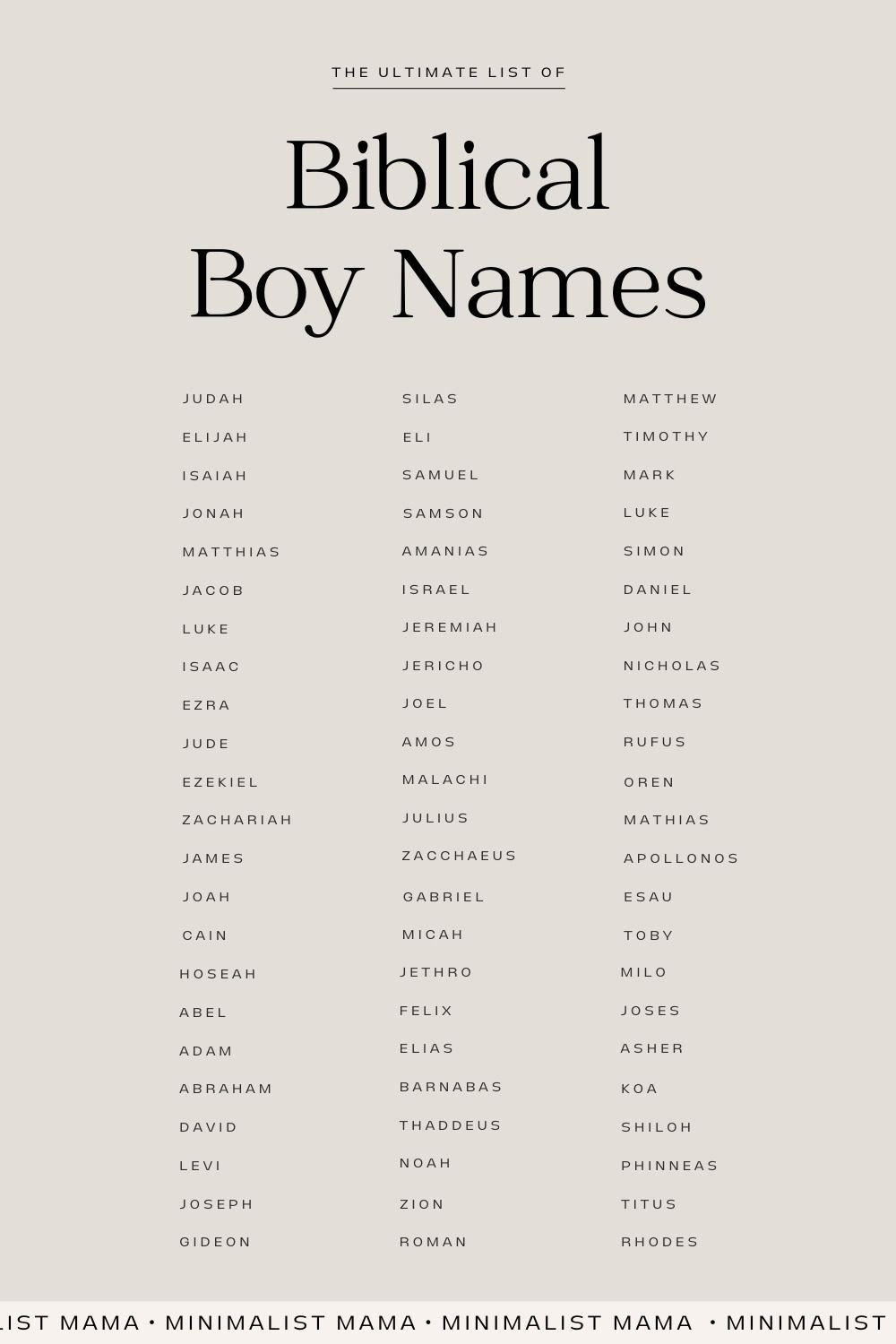
Choosing a name for your son is a profound decision, a moment where hopes, heritage, and aspirations converge. For Christian parents, this choice takes on an even deeper spiritual resonance. Selecting from christian bible names and meanings isn’t just about finding a label; it’s about imbuing your child with a legacy of faith, character, and divine purpose, providing a lifelong anchor in their spiritual journey.
A biblical name can serve as a daily reminder of God’s faithfulness, the strength of ancient patriarchs, the courage of prophets, or the steadfastness of apostles. It connects your son to a narrative far grander than his own, shaping his identity within the vast tapestry of Christian history and meaning.
At a Glance: Crafting Your Son’s Spiritual Identity
- Uncover Deeper Meanings: Move beyond sound to explore the rich spiritual significance behind each name.
- Connect to Biblical Narratives: Understand the stories and characters associated with names to inspire virtue.
- Discern Character Traits: Choose names that embody the strengths and qualities you wish for your son.
- Navigate Complexities: Learn how to approach names with challenging biblical backstories or multiple interpretations.
- Balance Tradition with Uniqueness: Find a name that feels both timeless and personal for your family.
- Build a Lasting Legacy: Select a name that can be a source of strength, comfort, and conversation throughout his life.
The Spiritual Tapestry: Why Christian Names Matter Beyond the Sound
For millennia, names in biblical cultures were far more than mere identifiers; they were pronouncements, prophecies, and reflections of character or circumstance. When you delve into christian bible names and meanings, you’re not just picking letters; you’re adopting a declaration. These names carry historical weight and spiritual significance, from the unwavering faith of patriarchs to the transformative journeys of New Testament figures. They are living echoes of God’s interaction with humanity, encapsulating virtues like strength, leadership, devotion, and compassion.
A biblical name acts as a spiritual heirloom, passed down through generations. It serves as a gentle, yet powerful, daily prompt of faith, often inspiring children to explore the stories and lessons behind their own names. This connection can foster a deeper understanding of their place within God’s story and their personal walk with Him. To explore a wider array of options and their general significance, you might want to Discover meaningful biblical names, which provides a broader landscape of choices.
Decoding the Depths: Understanding Biblical Name Meanings
The true power of Christian names lies in their origins and meanings. A name like “Daniel” (God is my judge) immediately evokes images of unwavering faith and integrity in the face of immense pressure. “Joshua” (The Lord is salvation) points to divine leadership and the fulfillment of promises. Understanding these layers transforms a simple name into a profound statement.
Let’s look at how specific names from the Bible offer a spiritual compass for your son:
- Names Reflecting God’s Character and Presence: These names remind us of who God is and His constant care.
- Emmanuel (Hebrew: “God with us”): A prophetic name for Jesus, symbolizing God’s intimate presence among humanity. Choosing this name acknowledges God’s nearness in every aspect of life.
- Gabriel (Hebrew: “God is my strength”): The archangel who announced miraculous births, including Jesus’. This name speaks of divine power and the strength found in God.
- Elijah (Hebrew: “Yahweh is God”): A prophet known for confronting idolatry and performing powerful miracles, embodying fierce devotion and faith.
- Joel (Hebrew: “Yahweh is God”): Another prophet, whose name reaffirms God’s sovereignty and might.
- Names of Faith and Resilience: These names tell stories of individuals who endured trials with steadfast trust in God.
- Abraham (Hebrew: “father of many nations”): The patriarch of faith, whose story teaches us about trust, obedience, and God’s expansive promises. A name suggesting leadership rooted in humility.
- Caleb (Hebrew: “devotion to God,” “whole-hearted”): A faithful spy who, unlike his peers, fully trusted God’s promise about the Promised Land. This name signifies unwavering loyalty and courage.
- Job (Hebrew: “persecuted” or “hated”): A righteous man who suffered immensely but maintained his integrity and faith. His name embodies perseverance and trust in God’s ultimate plan, even amidst hardship.
- Isaac (Hebrew: “laughter”): Born to Abraham and Sarah in their old age, a testament to God’s miraculous timing and promise-keeping. His name brings joy and reminds us that God often brings unexpected delight.
- Names of Service and Leadership: These names often belong to those called to guide, serve, or deliver God’s people.
- Moses (Egyptian: “drawn out of water”): The deliverer who led Israel out of slavery and received the Ten Commandments. His name suggests divinely appointed leadership and a life of profound impact.
- Joshua (Hebrew: “the Lord is salvation”): Moses’s successor, who led Israel into the Promised Land. This name signifies courageous leadership and the fulfillment of God’s plans.
- Barnabas (Aramaic: “son of encouragement”): An early church leader known for his generosity and support, embodying compassion and the gift of uplifting others.
- Andrew (Greek: “manly” or “brave”): One of Jesus’s first disciples, known for bringing others to Christ. His name suggests boldness, dedication, and a pioneering spirit in faith.
- Cautionary Tales: Names with Complex Legacies: Not all biblical names are associated with purely positive figures. Understanding the full story provides a nuanced perspective.
- Ahab (Hebrew: “father’s brother”): A wicked king of Israel who led his people into idolatry. While a biblical name, its association serves as a reminder of choices and consequences.
- Absalom (Meaning “Father of peace”): David’s son, known for his beauty but also for his rebellion against his father. A name that, despite its peaceful meaning, carries a story of conflict and tragedy.
- Cain (Hebrew: “possessed” or “acquired”): Adam and Eve’s first son, who committed the first murder out of jealousy. While biblically significant, it’s rarely chosen due to its dark association.
When considering a name from the latter category, parents often weigh whether the meaning (e.g., Absalom’s “Father of peace”) can be detached from the character’s actions, or if the narrative itself offers a powerful lesson to reflect upon. Most often, parents gravitate towards names of virtuous figures.
A Practical Framework for Choosing Your Son’s Spiritual Anchor
Selecting a Christian name for your son is a journey that blends prayer, research, and personal discernment. Here’s a step-by-step framework to guide you:
- Start with Prayer and Reflection: Before you even open a list, pray for guidance. Ask what qualities you hope to instill in your son and how a name might reinforce those virtues. Consider what biblical themes or stories resonate most deeply with you and your partner. This spiritual foundation is crucial.
- Explore the Narrative Behind the Name: Don’t just pick a name because it sounds nice. Dive into the biblical context. Who was this person? What was their story? What challenges did they face, and how did they demonstrate faith?
- Example: If you like “David,” read 1 and 2 Samuel. Understand his journey from shepherd to king, his unwavering faith against Goliath, his deep repentance after sin, and his heart after God. This deep dive provides context for the name’s “meaning” in action.
- Evaluate the Meaning — Literal and Symbolic:
- Literal Meaning: Many Hebrew names have clear, descriptive meanings (e.g., “Moses” means “drawn out,” reflecting his rescue from the Nile).
- Symbolic Meaning: Beyond the literal, what does the character represent? “Noah” (rest, comfort) symbolizes faithfulness in a corrupt world and a new beginning. Consider both aspects to understand the name’s full spiritual weight.
- Consider the Sound and Flow (Practicality Matters):
- Does the name sound pleasant when spoken aloud?
- How does it pair with your last name? (e.g., “Moses Matthews” vs. “Moses Johnson”).
- Is it easy to pronounce and spell? While spiritual meaning is paramount, daily practicalities are also important for your son.
- Think about potential nicknames. Sometimes a longer, meaningful name can have a wonderful shorter nickname. For instance, “Nathaniel” (Gift of God) could be “Nate.”
- Family Legacy and Personal Connection:
- Are there names from your family history that have biblical roots? Honoring a grandparent or respected elder with a biblical name can be a powerful tribute.
- Does a particular biblical character hold special significance for you or your spouse’s faith journey? Perhaps a prophet whose message deeply impacted you, or an apostle whose life inspires you.
- Case Snippet: Sarah and Mark wanted a name that spoke of steadfastness. They both admired the unwavering faith of Daniel in the lion’s den. While “Daniel” was a classic, its powerful meaning (“God is my judge”) and the story of integrity resonated deeply, making it the perfect choice for their son.
Navigating Nuances: Advanced Considerations for Christian Names
Beyond the direct steps, several nuanced factors can influence your final decision when selecting from christian bible names and meanings.
- The Popularity Paradox: Unique vs. Classic:
- Classic Names like David, John, and James offer familiarity and a clear connection to foundational biblical figures. They are timeless and widely recognized.
- Less Common Names such as Epaphras (lovely), Obadiah (servant of the Lord), or Phineas (oracle) can offer uniqueness while still carrying profound biblical weight. Be prepared to explain their origins and meanings.
- Tip: If you lean towards uniqueness, ensure the name isn’t overly difficult to pronounce or spell, which could lead to frustration for your child later.
- Modern Interpretations vs. Ancient Roots: Some biblical names have evolved in usage or perception. “Judas,” for example, means “praised” but is irrevocably linked to betrayal. While its ancient root is positive, its modern connotation makes it virtually unusable. Always consider the contemporary understanding alongside the historical meaning.
- Compound Names and Middle Names: A biblical first name can be beautifully complemented by a meaningful middle name, whether it’s another biblical name, a family name, or one with a special personal meaning.
- Example: “Caleb Joseph” combines loyalty and devotion (“Caleb”) with increase and provision (“Joseph”). This layering of meaning can create a rich, personal identity.
- The Importance of Nicknames: Many biblical names lend themselves to natural, affectionate nicknames. “Benjamin” can become “Ben,” “Jonathan” can become “Jon” or “Nate.” Consider if the potential nicknames are also appealing, as your son will likely be called by both throughout his life.
Quick Answers to Your Spiritual Naming Queries
Parents often have specific questions as they navigate the vast landscape of christian bible names and meanings.
Q: Are all biblical names inherently “Christian” in their meaning?
A: While all names in the Bible are biblical, their “Christian” significance often comes from their context within God’s narrative and the character they represent. Names of faithful patriarchs, prophets, apostles, and those connected to Jesus (like Emmanuel or Joshua) are strongly associated with Christian virtues. Some names, though biblical, are associated with negative figures or have secular meanings without a strong spiritual tie. The key is the meaning and story you want to impart.
Q: Can I use a name with a difficult biblical story, like Absalom or Achan?
A: You can, but it requires careful consideration. For names like Absalom (“Father of peace”), the positive meaning exists, but the character’s rebellious actions overshadow it for most. For Achan (“Trouble”), the meaning itself is negative. If you choose such a name, be prepared to explain your reasoning and possibly reframe the narrative as a cautionary tale or a lesson learned, rather than simply celebrating the character. Most parents opt for names with overwhelmingly positive associations.
Q: How do I balance tradition with uniqueness when choosing a Christian name?
A: This is a common tension. You can achieve balance by:
- Choosing a classic name with a unique spelling (though this can lead to lifelong spelling corrections).
- Opting for less common but still biblically significant names (e.g., Hezekiah, Boaz, Asa).
- Using a classic biblical first name with a more unique middle name, or vice versa.
- Selecting a name that transcends trends—names like Isaac, Noah, and Samuel have been consistently cherished for their timeless appeal and deep meaning.
Q: What if I love a name’s sound, but its biblical meaning or story isn’t ideal?
A: If the primary draw is the sound, but the spiritual meaning is weak or negative, it’s wise to reconsider. The very purpose of choosing a Christian biblical name is to infuse spiritual significance. If that core element is missing or detrimental, the name may not serve its intended purpose as a spiritual anchor. Look for names that offer both appealing sound and profound meaning. Sometimes, a similar-sounding name with a better meaning exists.
Embarking on Your Naming Journey with Purpose
The task of naming your son is a profound privilege, especially when drawing from the rich wellspring of christian bible names and meanings. It’s an opportunity to speak destiny, character, and faith into his life from the very beginning. Approach this journey with prayerful consideration, diligent research, and an open heart, trusting that you will be guided to a name that not only sounds beautiful but also carries a spiritual legacy that will bless your son for a lifetime. Choose a name that will be a constant whisper of God’s truth, a reminder of strength, and an encouragement to walk a path of purpose.

- Christian Bible Names and Meanings for Your Sons Spiritual Journey - November 7, 2026
- Christian Names and Meaning Reveal Enduring Choices for Boys - November 6, 2026
- Biblical Boy Names and Meanings Offer Powerful Spiritual Legacies - November 5, 2026