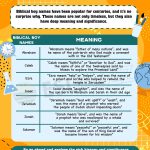
Choosing a name for your son is one of the most profound decisions a parent makes, a moment charged with hopes and aspirations. When you delve into bible boy names and meanings, you’re not just picking a sound; you’re bestowing a legacy, a narrative that can shape identity and purpose. These names, rich with history and spiritual significance, carry stories of faith, resilience, leadership, and divine favor, offering a powerful foundation for a child’s character.
At a Glance: Crafting a Purposeful Identity
- Uncover the Legacy: Explore how biblical names are steeped in stories of prophets, kings, and disciples, offering deep character and spiritual connections.
- Decipher Core Meanings: Understand the profound significance behind names like “God is my strength,” “beloved,” or “laughter,” and how these resonate with desired virtues.
- Navigate Popularity & Uniqueness: Balance names that are consistently popular (like Elijah, Caleb) with unique, lesser-known options (like Arnan, Ethnan) to find the perfect fit.
- Align Name with Aspiration: Learn to select names that reflect your hopes for your son’s future – be it strength, wisdom, kindness, or leadership.
- Practical Selection Toolkit: Gain actionable strategies and a framework to confidently choose a name that offers both strength and meaning.
Beyond the Sound: The Enduring Power of Biblical Meanings
A name from the Bible isn’t merely an ancient appellation; it’s a condensed biography, a whisper of divine intention. These names often encapsulated a person’s character, their birth circumstances, or a specific calling from God. For parents today, understanding these layers of meaning provides a unique opportunity to connect their son to a rich heritage of faith, ethics, and strength. It allows you to select a name that doesn’t just sound good but means something profound, giving your son a built-in narrative of purpose.
Think of an “Aaron,” whose name means “exalted” or “high mountain.” He was not only the first high priest but a leader known for balancing power with eloquence and a softer side. Or an “Asher,” meaning “happy” or “blessed,” whose very name promised abundance and cheerfulness. These aren’t just definitions; they are character blueprints.
Categorizing Purpose: Themes in Biblical Names
The vast array of biblical names can be grouped by the predominant themes they represent, making your search more focused. Consider what virtues or stories you wish to evoke.
Names Signifying Strength and Resilience
Many biblical names embody physical or spiritual fortitude, perfect for a son you hope will stand firm in challenges.
- Boaz: Meaning “strength,” a righteous man in the book of Ruth, known for his integrity and kindness.
- Gideon: “Mighty warrior,” a judge who delivered Israel from oppression with faith and strategic courage.
- Ethan: “Strong and firm,” a name consistently popular, reflecting stability and endurance.
- Anak: An ancient name linked to a race of giants, symbolizing immense power and endurance.
- Caleb: “Whole-hearted,” “faithful,” and “devotion.” One of the twelve spies who trusted God’s promise completely, a testament to unwavering conviction. Ranked 52nd in the U.S. in 2019, it remains a mainstream choice.
- Azriel: “God is my help.” A powerful name suggesting an individual carrying out divine will fearlessly.
Names Reflecting Leadership and Wisdom
For a son destined to lead or guide, names tied to biblical figures of authority and insight offer inspiration.
- Abraham: “Father of multitudes” or “father of many nations.” A foundational patriarch revered across major faiths, embodying faith, obedience, and strong leadership.
- David: “Beloved.” The shepherd king who unified Israel, known for his courage, artistry, and leadership “after God’s own heart.”
- Augustus: A powerful Roman ruler mentioned in the Bible, associated with transforming an empire and strong leadership.
- Solomon: While not on the main list, a classic example of wisdom. From the ground truth: Daniel (“God is my judge”), a prophet known for wisdom and faithfulness in Babylon, an eternally popular name.
- Amos: “Brave,” “strong,” or “carried by God,” a prophet known for foresight and integrity.
Names Embodying Divine Connection and Blessing
These names highlight God’s grace, presence, or blessings, suitable for a child whose birth feels like a direct gift.
- Asher: “Happy” or “blessed.” One of Jacob’s sons, whose lineage was promised abundance. A consistently gentlemanly name (ranked 43rd in U.S. in 2019) for cheerful leaders.
- Emmanuel (Immanuel): “God is with us.” A prophetic name for the Messiah, signifying God’s constant presence and protection.
- Gabriel: “God is my strength.” The archangel who delivered crucial divine messages. Consistently in the top 100 since 1976.
- Isaac: “Laughter.” Son of Abraham and Sarah, a fulfillment of God’s miraculous promise in old age. A name shared by many famous scientists and artists.
- Jonathan: “Gift of God.” Saul’s son and David’s loyal, self-sacrificing friend.
- Nethaneel: “Gift of God,” a leader assisting Moses.
Names of Compassion and Encouragement
For a son you envision as kind, supportive, and a comfort to others, these names offer a gentle yet strong resonance.
- Barnabas: “Son of encouragement.” Renamed by the early church for his compassionate act of selling land to support the poor.
- Nahum: “Comforter.” A prophet who brought reassurance of God’s justice.
- Arnan: Implying joy, happiness, and energy; a classic sacred yet playful choice.
- Demas: “Beloved,” a companion of Paul.
Choosing with Intention: A Practical Framework
Selecting a name from the Bible requires more than just liking the sound. It involves a thoughtful process that aligns your values with the name’s inherent meaning and historical context.
Step 1: Define Your Desired Virtues
Before you even look at names, consider what character traits you hope your son embodies. Do you wish him to be strong, kind, wise, faithful, a leader, or a source of joy? Jot down a few keywords. This initial reflection acts as a filter for the vast number of biblical options.
- Example: If “wisdom” and “faithfulness” are key, names like Daniel or Solomon (if considering names beyond the immediate list) immediately come to mind. If “strength” and “loyalty” are paramount, Caleb or Benaiah could be frontrunners.
Step 2: Explore the Stories Behind the Names
Once you have a shortlist, dive into the biblical narratives. Understanding the person behind the name—their challenges, triumphs, and character—enriches the meaning exponentially. Was the biblical figure a prophet, a king, a disciple, or someone who faced significant trials?
- Case Snippet: If you’re considering Elijah (“my God is Yahweh”), you’d learn about a powerful prophet who fearlessly challenged idolatry, performed miracles, and was taken to heaven in a whirlwind. This adds layers of meaning far beyond a simple definition. In 2019, Elijah was the 5th most popular name in the U.S., showcasing its enduring appeal.
Step 3: Consider the Name’s Practicality and Flow
While meaning is paramount, practicality matters. How does the name sound with your surname? Are there common nicknames, and do you like them? Does it have an intuitive spelling and pronunciation?
- Example: A name like Nehemiah (“comforted by God”), while meaningful, might be a longer choice. Its flow with a two-syllable surname might be different than with a single-syllable one. Or, for a name like Buz, its brevity could make it striking, but its uniqueness might invite more questions.
Step 4: Balance Popularity with Uniqueness
The ground truth research highlights both highly popular names and more unique options.
- Popular Choices: Names like Noah (“rest,” “comfort”), James (“supplanter”), John (“God is gracious”), Matthew (“gift of God”), Luke (“light-giving”), Andrew (“manly,” “strong”), and Peter (“rock”) have a timeless appeal, offering familiarity and widespread acceptance. Andrew was ranked 46th in the U.S. in 2019.
- Rising Stars: Ezra (“help” or “helper”) has seen a significant rise (ranked 49th in U.S. in 2019), showing a growing appreciation for classic yet fresh biblical options.
- Unique Gems: For those seeking something less common but equally meaningful, names like Othniel (“God’s lion”), Jephthah (“God opens”), Ethnan (“strong, enduring”), Jabez (“sorrow” but prayed for and blessed), or Chuza (“noble” or “intelligent”) offer distinctiveness.
- Practical Tip: Use current popularity rankings (like those cited from 2019) as a guide. If you want your child to stand out in a classroom, lean towards names outside the top 50 or 100.
For a comprehensive list of names and broader context on their historical impact and enduring appeal, you can consult Our Guide to Biblical Boy Names.
Deep Dive: Notable Bible Boy Names and Their Enduring Stories
Let’s look closer at a few names from the ground truth to illustrate how rich these choices can be.
Adam: The Beginning of Humanity
Meaning: “Man” or “formed from the red earth.”
Story: The first man created by God, Adam represents humanity’s origin, our connection to the earth, and the initial innocence and responsibility given to mankind. Choosing Adam is to evoke the very genesis of life, a symbol of primal connection and universal humanity. It’s a classic, simple, yet immensely powerful name that speaks of fundamental identity.
Joseph: Dreamer, Survivor, Provider
Meaning: “God will add.”
Story: Joseph, son of Jacob, was a dreamer sold into slavery by his brothers. Through incredible adversity, his wisdom and integrity led him to become a powerful ruler in Egypt, saving many from famine. His story is one of perseverance, forgiveness, divine guidance, and ultimately, provision. A son named Joseph carries the legacy of overcoming hardship, wisdom in leadership, and being an instrument of blessing for others.
Cyrus: The Unlikely Deliverer
Meaning: Greek (Kyros), meaning “lord,” “sun,” or “throne.”
Story: Cyrus the Great was a Persian king, a non-Israelite ruler whom God used prophetically to allow the exiled Israelites to return to Jerusalem and rebuild their temple. This makes Cyrus a powerful symbol of God working through unexpected channels, a reminder that divine purpose can transcend conventional boundaries. It’s a name that signifies leadership, destiny, and a unique role in a larger plan. The name has maintained presence on U.S. popularity charts for over 100 years.
Hezekiah: Trust and Righteousness in Kingship
Meaning: “My strength is the Lord” or “God strengthens.”
Story: Hezekiah was the 13th king of Judah, known for his righteousness, his unwavering trust in God during times of trial (even when facing a powerful Assyrian army), and his efforts to restore the worship of God. His story is one of bold faith, obedience, and how leaning on divine strength can lead to miraculous deliverance and renewal. It’s a name for a son you hope will demonstrate steadfast faith and moral courage.
The Practical Playbook for Your Son’s Name
Choosing a biblical name is a journey of discovery. Here’s a quick-start guide to bring your choice to life:
- Envision the Character: Close your eyes and imagine the man your son will become. What three qualities do you hope he embodies? (e.g., Courage, Compassion, Wisdom).
- Match with Meaning: Scan lists of biblical names, prioritizing those whose meanings directly align with your envisioned qualities.
- For Courage: Gideon, Azriel, Barak (“lightning”), Benaiah (“built by God”).
- For Compassion: Barnabas, Demas, Nahum.
- For Wisdom: Daniel, Amos.
- Read the Story: For your top 5-10 names, delve into their biblical accounts. Did the person live up to their name’s meaning? What lessons does their story offer?
- Scenario: You like Cain (“spear” or “possessed”). Reading his story reveals he murdered his brother, Abel. While a biblical name, this specific narrative might lead you to reconsider, perhaps favoring Abel (“breath” or “vapor,” representing innocence and pleasing sacrifice) instead.
- Test the Sound: Say the full name (first and last) aloud. Write it down. Does it flow well? Is it easy to spell and pronounce?
- Seek Soft Feedback: Share your top choices with a trusted friend or family member for their initial impressions, but ultimately, trust your own heart.
Quick Answers: Common Questions About Biblical Boy Names
Are all biblical names “good” choices?
Not necessarily. While all names come from the Bible, some are associated with negative stories or characters. For instance, Cain murdered his brother, Dathan rebelled against Moses, and Korah led a rebellion that resulted in divine judgment. Similarly, Caiaphas was the high priest involved in Jesus’ trial. The “goodness” of a name often hinges on the character and actions of the person who bore it, making the “story behind the name” crucial for parents.
How do I balance a unique biblical name with potential challenges?
Names like Buz, Jephthah, or Anak are distinctive but may require more explanation for pronunciation or origin. If you love a unique name but worry about constant corrections, consider a well-known middle name, or simply embrace its distinctiveness as a conversation starter. The beauty of uniqueness often outweighs minor practical inconveniences.
Do a name’s meaning or story always define the child?
While a name can inspire or offer a prophetic aspiration, it does not predetermine a child’s destiny or personality. A child’s character is shaped by many factors—upbringing, environment, personal choices. However, knowing the meaning and story behind a biblical name can provide a foundational narrative, a set of virtues to aspire to, and a powerful sense of identity and heritage. It’s a guide, not a rigid prophecy.
What if a name has multiple interpretations or meanings?
Some names, like Amos, have slightly varying but complementary meanings (“brave,” “strong,” “burden,” or “carried by God”). This adds to the richness, allowing for a broader scope of interpretation and personal connection. Embrace the multi-faceted nature; it often highlights different aspects of a strong character.
Your Son’s Purposeful Identity Begins Here
Choosing a name is an act of hope, a declaration of what you envision for your child. When you select from bible boy names and meanings, you’re tapping into a source that has inspired generations, imbuing your son with a heritage of strength, faith, and profound purpose. Take the time to explore not just the sound, but the soul of each name. By doing so, you’ll select a name that resonates deeply with your family’s values and helps forge a truly purposeful identity for your son, giving him a story to carry and live into.

- Bible Boy Names and Meanings for a Purposeful Identity - November 18, 2026
- Timeless Strong Biblical Male Names Rooted in Faith and Character - November 17, 2026
- Biblical Baby Names Offer Strong and Meaningful Choices for Boys - November 16, 2026