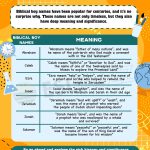
For the bigger picture and full context, make sure you read our main guide on Biblical Boy Names Offer Strength And Meaning For Your Son.
Choosing a name for your son is a profound decision, a gift of identity that will echo through his life. While popular choices abound, venturing into the realm of rare biblical names offers a distinct opportunity to bestow a unique identity imbued with deep spiritual meaning and a rich historical legacy. Imagine giving your child a name that stands apart, yet carries the gravitas of ancient wisdom and stories of faith, resilience, and divine purpose. It’s about finding a name that not only sounds distinguished but also connects him to a heritage of profound values.
At a Glance: Unearthing Your Son’s Unique Biblical Name
- Discover Untapped Meanings: Explore names with profound spiritual and historical significance, often overlooked.
- Embrace Individuality: Give your son a truly unique name that stands out in a crowd.
- Connect to Heritage: Link your child to millennia of faith, strength, and remarkable biblical figures.
- Navigate the Options: Learn how to select a name that balances rarity with practicality and personal resonance.
- Avoid Common Pitfalls: Understand how to choose a rare name wisely, considering pronunciation and modern usage.
- Find Hidden Gems: From Old Testament warriors to New Testament companions, uncover names that inspire.
Beyond the Familiar: Why Rare Biblical Names Stand Out
Many parents are drawn to biblical names for their timeless strength and inherent meaning. Names like David, Noah, and Samuel have graced generations, offering familiarity and reverence. But for those seeking something truly distinctive—a name that sparks curiosity and carries an air of quiet distinction—the deeper reaches of scripture offer a treasure trove. These uncommon biblical names aren’t merely old-fashioned; they are powerful echoes of ancient narratives, embodying virtues and stories that can inspire a lifetime.
Choosing a rare biblical name is more than just avoiding popular trends; it’s about making a deliberate statement. It reflects a desire to gift your son a name that is not only beautiful to hear but also rich in narrative, inviting conversations about his unique moniker and the spiritual legacy it represents. It’s a subtle nod to spiritual depth without being overtly denominational, offering a universal appeal rooted in universal values. For a wider exploration of traditional options that still carry significant weight, you might also consult our comprehensive guide on Biblical boy names for your son.
Unearthing Old Testament Gems: Names of Strength, Faith, and Purpose
The Old Testament is a sprawling tapestry of human experience, filled with kings, prophets, warriors, and everyday individuals whose stories shaped history. Within its pages lie dozens of unique biblical names, each with a distinct meaning and a character to connect with. When exploring these names, consider not just the sound, but the essence of the individual or concept it represents.
Echoes of Loyalty and Service
Many rare biblical names from the Old Testament speak to devotion and a calling to serve. These names often carry powerful reminders of humility and divine connection:
- Abdiel (Servant of God): An angelic name, symbolizing loyalty and truth. It carries an ethereal strength, suggesting one dedicated to higher principles.
- Obadiah (Servant of God): A faithful prophet, this name resonates with profound dedication and a connection to divine wisdom.
- Abda (Servant): A simpler, yet equally potent name, associated with service to a king, signifying faithfulness and reliability.
- Maaseiah (Work of the Lord): Shared by several faithful priests, this name implies a life dedicated to divine purpose and action.
Names Signifying Divine Aid and Protection
For parents seeking a name that symbolizes reliance on a higher power, the Old Testament offers compelling choices that speak to God’s help and provision:
- Azariah (God has helped): A name borne by multiple figures, including a high priest and a companion of Daniel. It’s a reminder of divine assistance in challenging times.
- Eleazar (God has helped): A prominent priest, son of Aaron, this name embodies priestly service and divine intervention.
- Ezriel (God is my help): A loyal servant of King David, suggesting steadfast support and heavenly assistance.
- Nehemiah (Comforted by God): A leader who rebuilt Jerusalem’s walls, this name symbolizes resilience, divine protection, and comfort in adversity.
- Uriel (God is my light): An angelic name representing enlightenment and divine guidance. A truly luminous choice.
- Zephaniah (God has hidden/Protected by God): A prophet’s name, speaking of divine safeguarding and a hidden strength.
Embodying Strength, Leadership, and Resilience
If you envision a son with qualities of courage, leadership, and unwavering determination, these rare biblical names offer powerful inspiration:
- Boaz (Strength/Swiftness): The generous and loyal husband of Ruth, this name carries connotations of power, vitality, and integrity.
- Barak (Lightning): A courageous commander who fought alongside Deborah, symbolizing speed, power, and decisive action.
- Gideon (Mighty warrior/Destroyer): A brave leader and judge, known for his incredible strength and bravery against overwhelming odds.
- Jethro (Excellence/Abundance): Moses’ wise father-in-law, a respected priest, embodying wisdom and spiritual abundance.
- Othniel (God’s strength): The first judge of Israel, a name that speaks to divine empowerment and leadership.
- Zadok (Righteous): A loyal priest under Kings David and Solomon, symbolizing justice, integrity, and steadfastness.
- Erez (Cedar/Strong): A Hebrew name representing the majestic cedar tree, known for its strength and resilience.
Names Reflecting Unique Qualities and Spiritual Insights
Beyond direct divine attributes, some rare biblical names offer distinct meanings related to personal character or destiny:
- Enoch (Dedicated/Trained): The seventh generation from Adam, righteous and faithful, signifying profound dedication and spiritual discipline.
- Jabez (Sorrow): Despite its literal meaning, Jabez is remembered for his prayer to be blessed, showing how one can overcome hardship through faith.
- Mordecai: A pivotal figure in the book of Esther, known for his wisdom, loyalty, and courage in protecting his people.
- Shiloh (Peaceful): A prophetic name symbolizing the coming of the Messiah, carrying deep resonance of peace and hope.
- Zerah (Rising/Dawn): An ancestor of King David, symbolizing new beginnings, light, and promise.
Discovering New Testament Treasures: Names of Grace, Community, and Perseverance
The New Testament, while featuring many familiar names, also holds a collection of unique biblical names from the early church—apostles, companions of Paul, and leaders whose contributions shaped the nascent Christian movement. These names often speak to qualities of faith, fellowship, and spreading the good news.
Companions on the Journey
Many New Testament rare biblical names belong to individuals who supported or traveled with the apostles, embodying loyalty and shared purpose:
- Ampliatus (Large/Spacious): Mentioned by Paul in Romans, suggesting one with a broad influence or generous spirit.
- Aristarchus (Best ruler): A steadfast travel companion of Paul, indicating leadership and loyalty.
- Barnabas (Son of encouragement): An early church leader known for his supportive nature, making it a wonderful name for a child destined to uplift others.
- Epaenetus (Praised/Praiseworthy): One of Paul’s first converts, a name that signifies esteem and value.
- Justus (Righteous): An early Christian loyal to Paul, embodying justice and integrity.
- Lucius (Light): A prophet and teacher from Antioch, connecting to illumination and guidance.
- Onesimus (Useful): A servant whose story reflects redemption and transformation, a powerful narrative of change.
- Philemon (Loving): An early Christian known for generosity, suggesting a tender and compassionate spirit.
- Silas (Of the forest): A missionary companion of Paul, evoking a sense of groundedness and natural strength.
- Tychicus (Fortunate/Fortunate one): A trusted companion and messenger of Paul, signifying good fortune and reliability.
- Zenas (Living): A lawyer mentioned by Paul, implying vitality and intellect.
Leaders and Teachers of the Early Church
These names carry the weight of early Christian leadership, wisdom, and influential roles:
- Apollos (Eloquent): A preacher known for his deep understanding of Scripture, an excellent choice for a child with a future in communication or teaching.
- Bartholomew (Son of Talmai/Son of furrows): One of the twelve apostles, a name steeped in foundational faith.
- Gamaliel (God is my reward): A respected teacher mentioned in Acts, symbolizing wisdom and divine recompense.
- Matthias (Gift of God/God’s reward): Chosen to replace Judas Iscariot as an apostle, a name signifying a divine calling.
- Stephanas (Crowned): Among the first converts in Achaia, representing victory and honor in faith.
- Thaddeus (Heart/Courageous): Another of the twelve apostles, embodying courage and deep affection.
The Art of Selection: Choosing Your Son’s Rare Biblical Name
Finding the perfect rare biblical name involves more than just liking the sound or meaning. It requires a thoughtful process to ensure it fits seamlessly into modern life while retaining its spiritual gravitas.
Practical Considerations
- Sound and Flow: Say the full name aloud—first, middle, and last. Does it flow well? Are there any awkward transitions or repetitive sounds?
- Pronunciation and Spelling: While rarity is appealing, overly complex pronunciation or spelling can lead to lifelong frustration. Consider how easily others will say and write it.
- Potential Nicknames: What natural nicknames might arise? Do you like them? Sometimes an obscure name can have a familiar, friendly nickname.
- Family Opinion (Optional): While ultimately your decision, gentle feedback from close family can be helpful, especially regarding potential teasing or family traditions.
- Meaning and Narrative: Dive deeper into the story of the biblical figure associated with the name. Does their character resonate with the qualities you hope to instill in your son? What virtues do you want him to embody?
A Mini-Case Study: Elior
Take the name Elior (God is my light). It’s rare, beautiful, and carries profound spiritual weight.
- Sound: Soft, lyrical, yet strong. “Ee-lee-OR.”
- Pronunciation: Relatively straightforward, though some might initially say “EL-ee-or.” A quick correction clarifies.
- Nickname: Eli is a ready and familiar option.
- Meaning: “God is my light” is universally positive, suggesting guidance, hope, and clarity. It’s inspiring without being overly prescriptive.
- Narrative: While not tied to a specific biblical figure in the canon, its Hebrew origin and meaning place it firmly within a spiritual context, allowing your son to forge his own narrative around its powerful meaning.
Practical Playbook for Naming Your Son
Choosing a rare biblical name is an exciting journey. Here’s a step-by-step approach to make it manageable and meaningful:
- Brainstorm Broad Categories: Start by thinking about the virtues or qualities you value most: strength, peace, wisdom, faith, service, light.
- Scan the Lists: Go through the curated lists of rare biblical names, highlighting any that catch your eye. Don’t censor yourself at this stage—just collect.
- Research Meanings and Stories: For each highlighted name, delve into its precise meaning and the story of any associated biblical figure using the context research provided. Does the meaning deepen your interest or give you pause?
- Create a Shortlist: Narrow your choices down to 3-5 favorites. Write them out with your last name.
- The “Loud Test”: Say each full name aloud, repeatedly. Imagine calling your son by this name in various situations. Does it feel right?
- The “Spell Test”: Write each name down. How intuitive is the spelling? Ask a trusted friend or partner to spell it after hearing it.
- Consider Nickname Options: Brainstorm potential nicknames. Are they appealing? Does the name lend itself to flexibility?
- Visual Test: Write the name on a piece of paper, imagine it on a birth certificate, or even a graduation diploma. Does it carry the gravitas you seek?
- Sleep on It: Give yourself time. The right name often reveals itself after a period of reflection.
Quick Answers to Common Questions
Parents often have specific concerns when considering uncommon names. Here are a few common questions addressed:
Are rare biblical names too rare? Will my son be constantly correcting people?
This is a valid concern. While some rare biblical names might require a polite correction or clarification of spelling occasionally, most are either intuitive enough or possess a classic structure that makes them easy to grasp. The “too rare” factor is subjective; many parents embrace the uniqueness and the opportunity it provides for their child to stand out. Names like Asa, Boaz, Elior, or Silas, while not common, are far from obscure and often appreciated for their distinctiveness.
What if the biblical character associated with the name isn’t perfect?
This is a profound question about biblical literacy. No human figure in the Bible, apart from Jesus, is portrayed as perfect. Even great leaders like David or Moses had flaws. The beauty of choosing a rare biblical name is not necessarily to replicate a perfect individual, but to draw inspiration from their story—their faith, their growth, their redemption, their unique contribution, or simply the powerful meaning of the name itself. You are giving your son the name, not the entirety of a person’s life story. Focus on the virtues or the core meaning that resonates with you.
Will these names sound dated or old-fashioned?
Quite the opposite! Many rare biblical names, by virtue of their uncommon usage, possess a timeless quality rather than feeling tied to a specific era. They offer an ancient resonance that feels fresh and sophisticated in a modern context. Names like Amzi, Jotham, or Kelita don’t have a common cultural touchstone in recent decades, allowing them to feel truly unique rather than merely “retro.”
Are there any modern variations of these rare names?
While the appeal of rare biblical names often lies in their authentic, unadulterated form, some do have more familiar variations. For example, Josias is a variation of Josiah, and many longer names can naturally shorten to popular nicknames (e.g., Obadiah to Obie, Zechariah to Zach, Elior to Eli). The beauty of a rare name is often in its original form, but understanding its flexibility can be reassuring.
A Legacy of Identity and Spirit
Choosing a rare biblical name for your son is an act of intention, a way to weave a thread of ancient wisdom and spiritual depth into the fabric of his modern life. It’s about giving him a name that is not just a label, but a story, a meaning, and a unique identifier that sets him apart with dignity and purpose. From the steadfast loyalty of an Abdiel to the illuminating grace of an Elior, these names are more than just words; they are echoes of faith, strength, and an enduring legacy. Embrace the journey, trust your intuition, and gift your son a name that will truly define him.

- Rare Biblical Names Offer Unique Identity and Deep Spiritual Meaning - November 20, 2026
- Discover Strong Male Bible Names with Enduring Faith and Character - November 19, 2026
- Bible Boy Names and Meanings for a Purposeful Identity - November 18, 2026